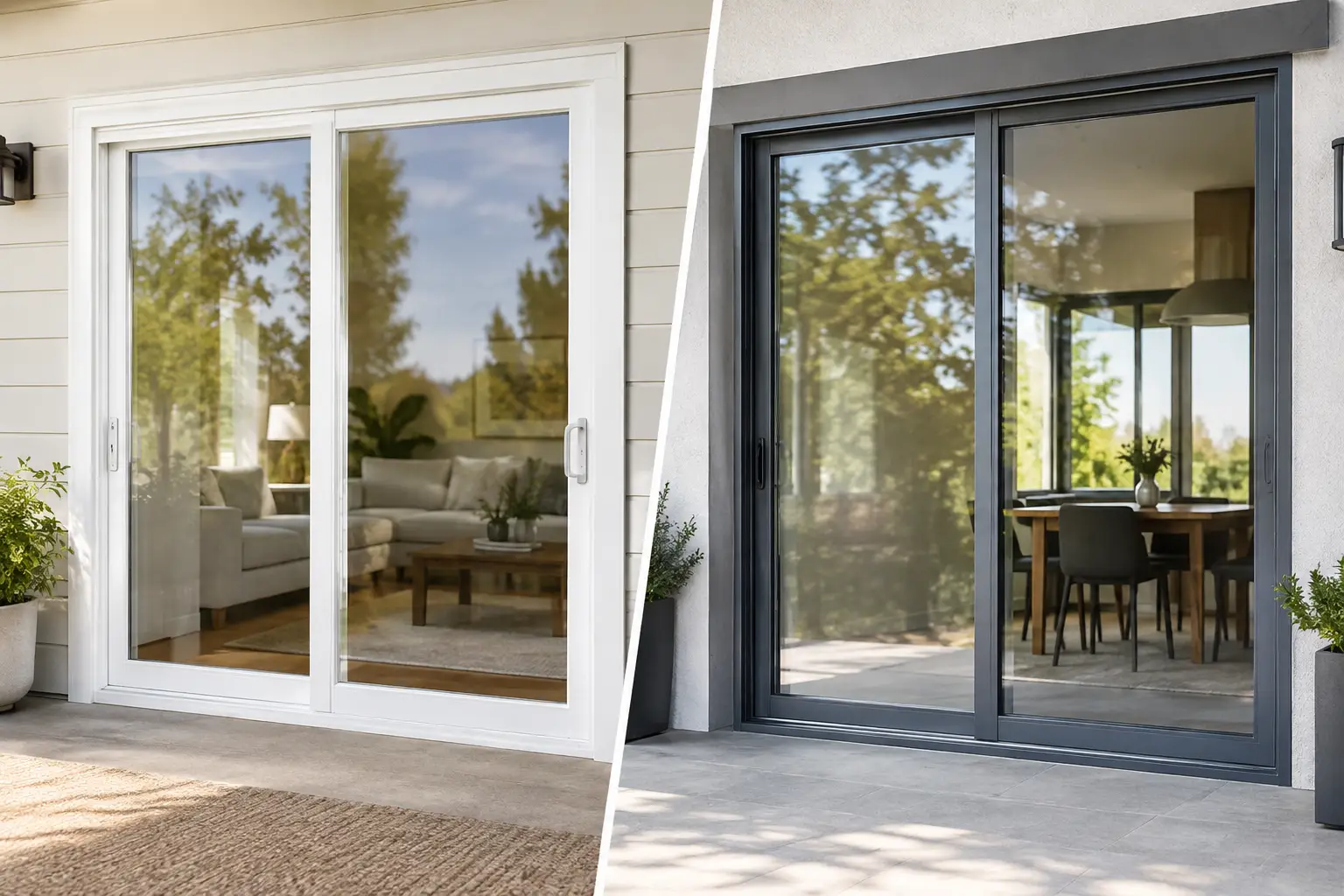
If you are weighing vinyl or aluminum windows, you are probably not choosing between two equal products. You are choosing between two different material systems that shape comfort, sightlines, opening sizes, maintenance, and the overall look of the home. For a standard renovation, either can work well. For a custom build, a modern façade, or large view-oriented openings, the decision becomes more technical.
This is where many window conversations go off track. Homeowners are often shown a basic vinyl window and a sleek aluminum one, then asked to compare price tags. That misses the real question. The better comparison is how each material behaves when you care about thermal performance, acoustic comfort, structural strength, and architectural intent.
Vinyl or aluminum windows: the real difference
Vinyl and aluminum are not simply two finishes. They have very different physical properties.
Vinyl window systems, especially premium PVC-U profiles with internal reinforcement and multi-chamber construction, are naturally efficient insulators. They reduce heat transfer through the frame, which helps keep interior glass temperatures more stable in winter. In practical terms, that can mean fewer cold zones near the window, less draft sensation, and more consistent comfort in bedrooms, living spaces, and large glazed areas.
Aluminum is structurally stronger and more dimensionally stable, which is why it is often the preferred choice for oversized units, narrow frame profiles, and contemporary designs with larger expanses of glass. Left unengineered, aluminum conducts heat readily. High-performance systems solve this with thermal breaks, insulated frame sections, advanced gaskets, and properly specified glazing packages. When done properly, aluminum can perform very well, but the quality of the system matters enormously.
That distinction is critical. Premium vinyl can outperform entry-level aluminum in thermal comfort. Premium thermally broken aluminum can outperform basic aluminum by a wide margin. Material alone does not tell the whole story.
Where vinyl windows tend to win
For homeowners focused on warmth, efficiency, and value retention, vinyl remains a strong choice.
A well-made vinyl system typically delivers excellent thermal performance without requiring the same level of engineering complexity as aluminum. Multi-chamber profiles, insulated glazing units, Low-E coatings, argon-filled cavities, and warm-edge spacer technology all work together to improve the window as a complete assembly. In Canada, where heating demand is not theoretical for much of the year, that matters.
Vinyl also works well in renovation projects where the priority is replacing underperforming builder-grade windows with something noticeably warmer and quieter. If the opening sizes are moderate and the design language of the home does not depend on ultra-slim sightlines, vinyl can provide a substantial upgrade in comfort.
There is also a finish and maintenance advantage that many buyers appreciate. Quality vinyl does not require repainting, and modern premium profiles are more refined than the bulky white frames many people still associate with the category. European-format systems from brands such as VEKA and Kömmerling have helped shift expectations here, with stronger profiles, better seals, cleaner geometry, and hardware that feels more substantial in daily use.
That said, vinyl has limits. As unit sizes increase, frame dimensions may need to grow to manage structural demands. If your design depends on very large fixed panels, oversized sliders, or a minimal modern expression, those limits become visible.
Where aluminum windows make more sense
Aluminum is often the right answer when architecture leads the brief.
If you want expansive glazing, narrower profiles, taller units, or a sharper contemporary aesthetic, aluminum brings structural advantages that are difficult for vinyl to match. This is why many custom homes use aluminum systems for feature elevations, corner glazing, oversized doors, and panoramic openings. You get more glass and less frame, which changes both the look of the façade and the quality of the interior light.
High-end aluminum systems also tend to support more ambitious engineering. This includes larger sash sizes, heavier triple-pane glass packages, advanced locking hardware, and greater precision across custom configurations. For architects and design-conscious homeowners, that flexibility can be worth the premium.
But aluminum should not be selected on looks alone. The quality range is wide. A basic aluminum frame may look elegant while underperforming thermally. A properly designed architectural system with polyamide thermal breaks, insulated sections, compression seals, and high-spec glazing is a very different product. Brands like Aluprof, Reynaers, and Schüco built their reputation on closing that gap between appearance and performance.
In other words, aluminum is at its best when it is specified as a true high-performance system, not treated as a visual upgrade.
Performance in Southern Ontario conditions
Climate puts pressure on window decisions. In Southern Ontario, homeowners often need one system to handle winter cold, summer heat, wind exposure, and urban or suburban noise.
In those conditions, vinyl has a natural advantage on frame insulation. That can make it especially appealing for primary bedrooms, family rooms, and any part of the home where comfort near the glass is a priority. Triple-pane configurations elevate that advantage further.
Aluminum can absolutely be appropriate in this climate, but only when the frame system is engineered for it. Thermally broken architectural aluminum paired with high-performance insulated glass can deliver excellent results, particularly in luxury homes where larger openings are non-negotiable. The trade-off is usually cost. To get aluminum to perform at a premium level, you need a premium product.
Noise is another factor that does not get enough attention. Material matters, but the glazing build-up, seals, frame design, and installation quality often matter more. A poorly installed premium window will disappoint. A well-installed system with strong compression seals and the right glass package can noticeably improve acoustic comfort, especially near busy roads.
Aesthetics, sightlines, and resale appeal
Design is not secondary here. The wrong material can work against the house.
Vinyl tends to suit traditional homes, transitional renovations, and many contemporary projects where balanced frame proportions are acceptable. In premium European-style profiles, the appearance is cleaner and more architectural than standard builder-grade vinyl, but it still reads as a fuller frame than aluminum.
Aluminum is typically the stronger visual fit for modern homes, flat-roof designs, minimalist façades, and projects centred on views. The slimmer lines can make openings feel larger even when the rough opening size is unchanged. On luxury homes, that difference is often obvious from the street and from inside the room.
Resale is more nuanced. Buyers rarely ask what the frame material is before they ask how the house feels. If the home is warmer, quieter, brighter, and visually well resolved, that is what they respond to. Material supports those outcomes, but it is not the outcome itself.
Cost is part of the answer, not the whole answer
Vinyl is usually the more economical option upfront, especially for whole-home replacement projects with many standard-sized openings. For homeowners trying to move well beyond entry-level quality without pushing into full architectural aluminum pricing, premium vinyl often hits the right balance.
Aluminum generally carries a higher initial cost, and that premium becomes more pronounced as systems get more specialized. Large lift-and-slide doors, floor-to-ceiling glazing, custom colours, and structurally demanding assemblies all add cost. Yet on the right project, aluminum is not an indulgence. It is the material that makes the design possible.
This is why a simple cheapest-versus-most-expensive framing misses the point. If the project calls for wide unobstructed views, slender frames, and oversized operable units, aluminum may be the more rational choice. If the project is a comfort-driven window replacement for a family home, premium vinyl may offer the better return.
So, should you choose vinyl or aluminum windows?
Choose vinyl if your priorities are thermal comfort, strong energy performance, lower upfront cost, and a high-quality replacement for conventional residential openings. Choose aluminum if your priorities are larger spans, slimmer sightlines, contemporary detailing, and architectural flexibility.
For many upscale homes, the smartest answer is not strictly one or the other. It is a considered mix. Vinyl may suit secondary elevations or punched window openings where insulation value is the main priority. Aluminum may be better for the rear façade, principal living areas, and oversized glazing where structure and visual restraint matter most. A premium supplier like ECOWIN can help align those choices with the architecture rather than forcing one material into every opening.
The best window decision usually sounds less like a product preference and more like a project brief. Start with how the home should feel, how the façade should read, and how large the glass needs to be. Once those answers are clear, the right material tends to reveal itself.