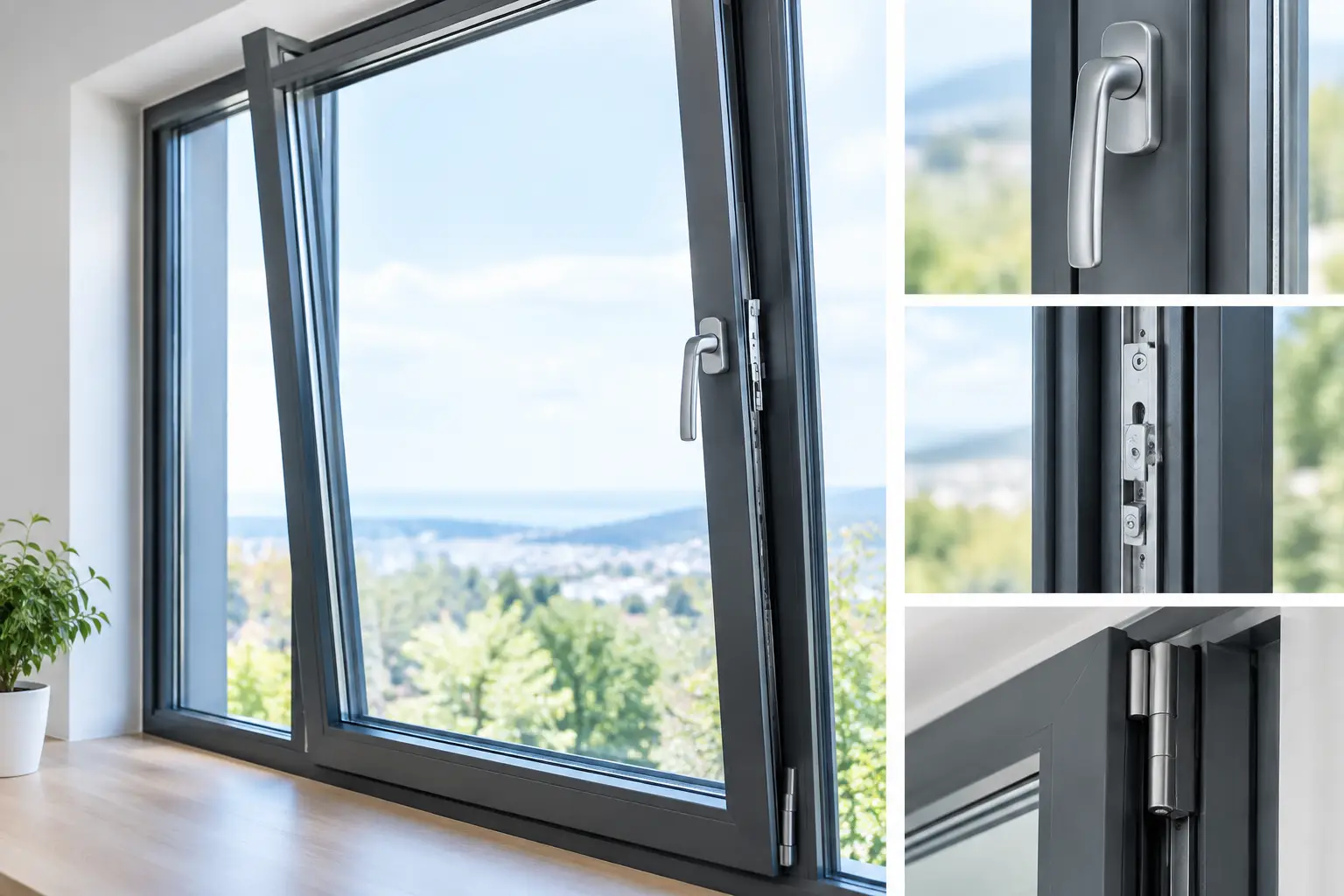
A patio door can be the coldest surface in a room or the architectural feature that makes the room worth building. When comparing vinyl vs aluminum patio doors, the better material is not simply the one with the lower price or slimmer frame. It is the system that can deliver the glass area, thermal performance, operating style, and visual weight your opening demands.
For Southern Ontario renovations and custom homes, that distinction matters. Patio doors are exposed to wind, rain, snow, direct sun, and frequent daily use. A high-performance door must control heat loss, resist air and water infiltration, roll or swing smoothly, and remain stable around a large insulated glass unit. The frame material influences every one of those outcomes.
Vinyl vs Aluminum Patio Doors: The Core Difference
Vinyl patio doors use insulated PVC-U profiles, often with multiple internal chambers and steel or composite reinforcement where needed. Their primary advantage is thermal efficiency. PVC-U does not conduct heat as readily as aluminum, so the frame begins with a stronger insulating foundation.
Aluminum patio doors are built around rigid architectural aluminum profiles. Aluminum has exceptional structural strength for its weight, allowing narrower sightlines, larger panels, and more glass. Because raw aluminum conducts heat quickly, premium systems use a thermal break – an insulating barrier that separates the interior and exterior sections of the frame.
Neither material is automatically superior. A well-engineered aluminum system with deep thermal breaks, high-performance glazing, insulated thresholds, and precise installation can perform exceptionally well. Likewise, a reinforced European PVC-U sliding door can offer excellent thermal comfort and impressive panel sizes. The question is whether the system suits the scale and architecture of the project.
Thermal Performance and Winter Comfort
For homeowners replacing a drafty builder-grade slider, vinyl is often the most direct route to a warmer opening. Multi-chamber PVC-U frames reduce conductive heat transfer, and premium vinyl systems pair effectively with triple-pane insulated glass units. Argon-filled cavities, Low-E coatings, and warm-edge spacer technology further reduce heat loss and help keep the interior glass surface warmer.
That warmer interior surface has a practical benefit: it reduces the cold-radiant feeling that makes a seating area beside the door uncomfortable in January. It can also help manage interior condensation when indoor humidity rises, although ventilation and humidity control remain part of the equation.
Aluminum requires more engineering to reach similar comfort levels. In entry-level aluminum patio doors, a limited thermal break can leave the frame noticeably cooler than the glass during winter. That is not the caliber of system appropriate for a premium residential envelope. Thermally broken architectural aluminum doors from established systems such as Aluprof, Reynaers, or Schüco are designed to address this weakness through insulated profile zones, advanced gaskets, and high-spec glass packages.
For a standard-sized opening where energy efficiency is the first priority, premium vinyl usually offers stronger value. For a large contemporary opening, high-performance aluminum can be the appropriate solution, provided its published thermal specifications match the project requirements.
Sightlines, Glass Area, and Design Intent
This is where aluminum changes the conversation. Its strength permits slimmer frame profiles relative to the size and weight they carry. The result is cleaner geometry, larger glass fields, and less visual interruption between the interior and the landscape.
For a modern rear façade with a wide opening to a ravine, waterfront, or landscaped terrace, aluminum can support configurations that would be impractical or visually heavy in vinyl. This includes oversized lift-and-slide panels, multi-panel stacking systems, corner openings, and panoramic glazing that makes the frame recede from view.
Vinyl has a more substantial profile, particularly when reinforcement is required. That is not necessarily a disadvantage. On a traditional home or a renovation with moderate-sized openings, the frame proportions can look balanced and intentional. Vinyl also suits French-style patio doors and conventional sliding arrangements very well.
The architectural test is simple: if the door should read as a high-performance opening within the wall, vinyl may be ideal. If it must function as a broad glazed wall with minimal visible structure, aluminum deserves serious consideration.
Size, Stability, and Operating Performance
Patio door performance is not only about the frame material. It is also about hardware, panel weight, roller quality, glass thickness, locking points, and installation tolerances. Still, material strength establishes the limits of the system.
Aluminum is the preferred choice for very wide or tall sliding panels. It resists deflection under the weight of large triple-pane glass units and can maintain crisp lines across ambitious spans. That rigidity supports smooth operation over time, especially when the system uses lift-and-slide hardware. In a lift-and-slide door, turning the handle raises the panel slightly off its seals for easy movement, then lowers it into compression seals when closed.
Reinforced PVC-U systems can also accommodate substantial doors, especially in high-quality European-format designs. They are a strong option for many residential sliders and tilt-and-slide doors. However, they have practical limits. As opening dimensions increase, frame depth and visible profile width generally increase as well.
For a typical replacement opening, choosing aluminum purely for strength may be unnecessary. For an opening designed around oversized panels or a nearly uninterrupted view, aluminum’s structural advantage is not a luxury detail. It is fundamental to the design.
Durability, Finishes, and Maintenance
Both materials can provide long service life when they are manufactured as complete, tested systems and installed correctly. Patio doors fail more often because of poor drainage, weak rollers, inadequate flashing, or loose installation than because the homeowner chose vinyl instead of aluminum.
Vinyl is low-maintenance and does not require painting. Light colours are especially forgiving. Dark vinyl finishes have improved significantly, but they should be specified carefully because darker surfaces absorb more solar heat. High-quality profiles and suitable reinforcement help control thermal movement, particularly on south- and west-facing elevations.
Aluminum is highly stable and available in durable powder-coated finishes, including refined dark tones, textured blacks, metallics, and custom architectural colours. It is an excellent fit where the patio door must coordinate with aluminum windows, façade cladding, or a contemporary entrance system. Coastal exposure, de-icing salts, and highly corrosive environments require finish and hardware specifications appropriate to those conditions.
Cleaning is straightforward for both: keep tracks clear, wipe drainage channels, clean weatherstripping, and avoid aggressive abrasives. The hardware deserves periodic inspection, particularly on large sliding panels where correct adjustment protects both operation and seals.
Cost: Look Beyond the Initial Door Price
Vinyl patio doors generally cost less than comparable aluminum systems. The gap can be meaningful, particularly when comparing a conventional vinyl slider with a thermally broken aluminum lift-and-slide door. That difference reflects more than material. It often includes heavier hardware, thicker glass capacity, more complex frame engineering, and the ability to fabricate larger units.
A better comparison asks what performance and design outcome the project needs. Installing a basic aluminum door in a cold climate to save money rarely makes sense if its frame becomes a weak point in the envelope. Conversely, forcing a vinyl system into an oversized opening can compromise the clean, expansive effect the architecture was meant to achieve.
Budget should also account for installation. Large doors need proper structural support, accurately prepared openings, sill pan and drainage strategy, air sealing, insulation continuity, and careful glazing adjustments. These details protect the investment more effectively than choosing a lower initial product price.
How to Choose the Right Patio Door Material
Choose premium vinyl when the project calls for strong thermal value, quiet interiors, dependable performance, and a conventional-to-generous opening size. It is especially compelling for renovations where the goal is to eliminate drafts and improve comfort without redesigning the entire rear façade.
Choose thermally broken aluminum when sightlines, panel dimensions, dark architectural finishes, or panoramic views drive the design. It is the stronger platform for contemporary custom homes, oversized lift-and-slide systems, and openings where the glass should take visual priority over the frame.
In either case, do not evaluate the frame in isolation. Ask about the complete assembly: triple-pane glass options, U-value, air and water performance, reinforcement, threshold design, multipoint locking, roller capacity, and the installation method. A premium patio door is a coordinated system, not a frame with glass inserted into it.
The most successful choice is the one that feels quiet and warm on a winter evening, opens effortlessly in July, and still looks proportionate to the architecture when viewed from across the room. That is the standard ECOWIN applies when specifying patio doors for high-performance homes.