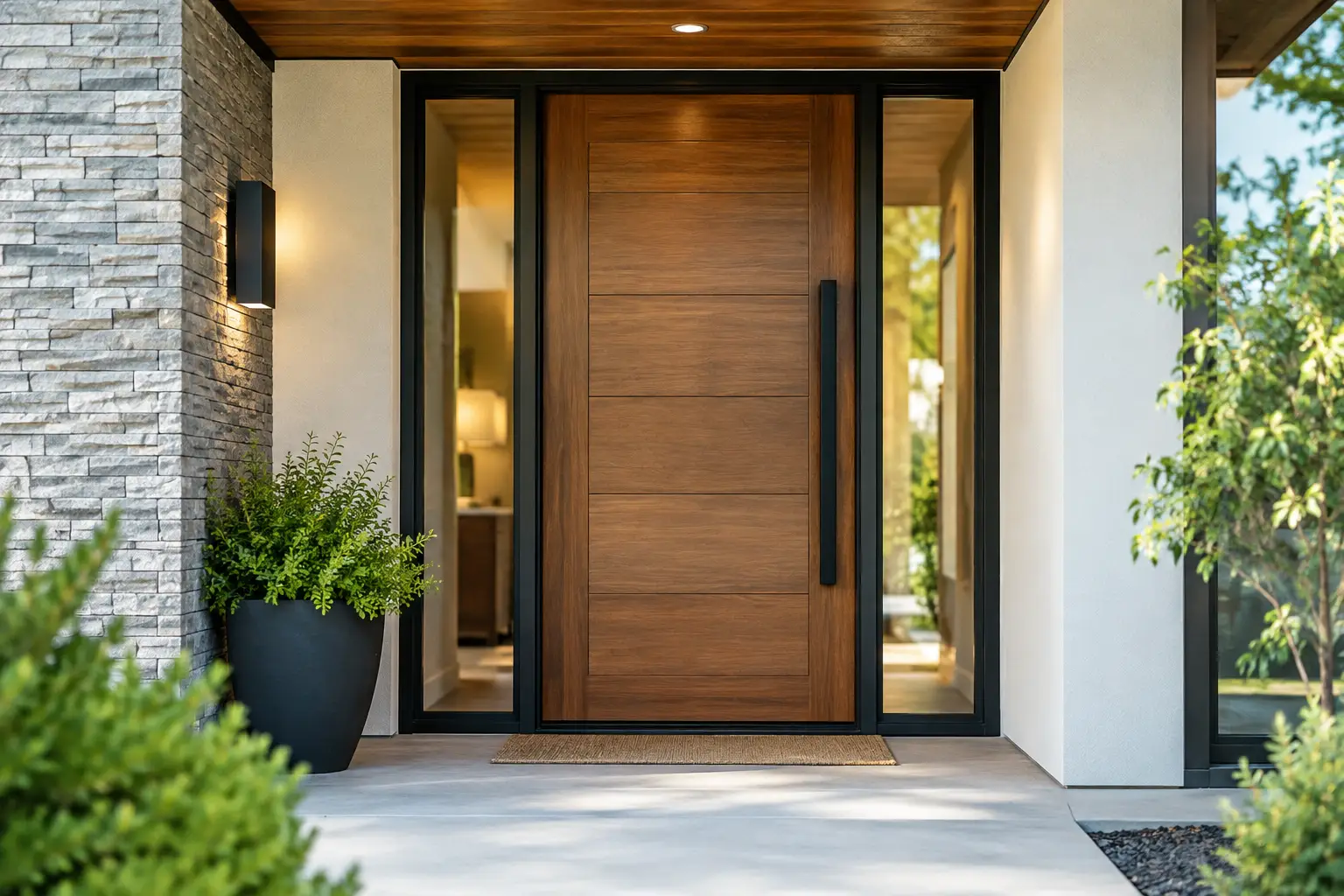
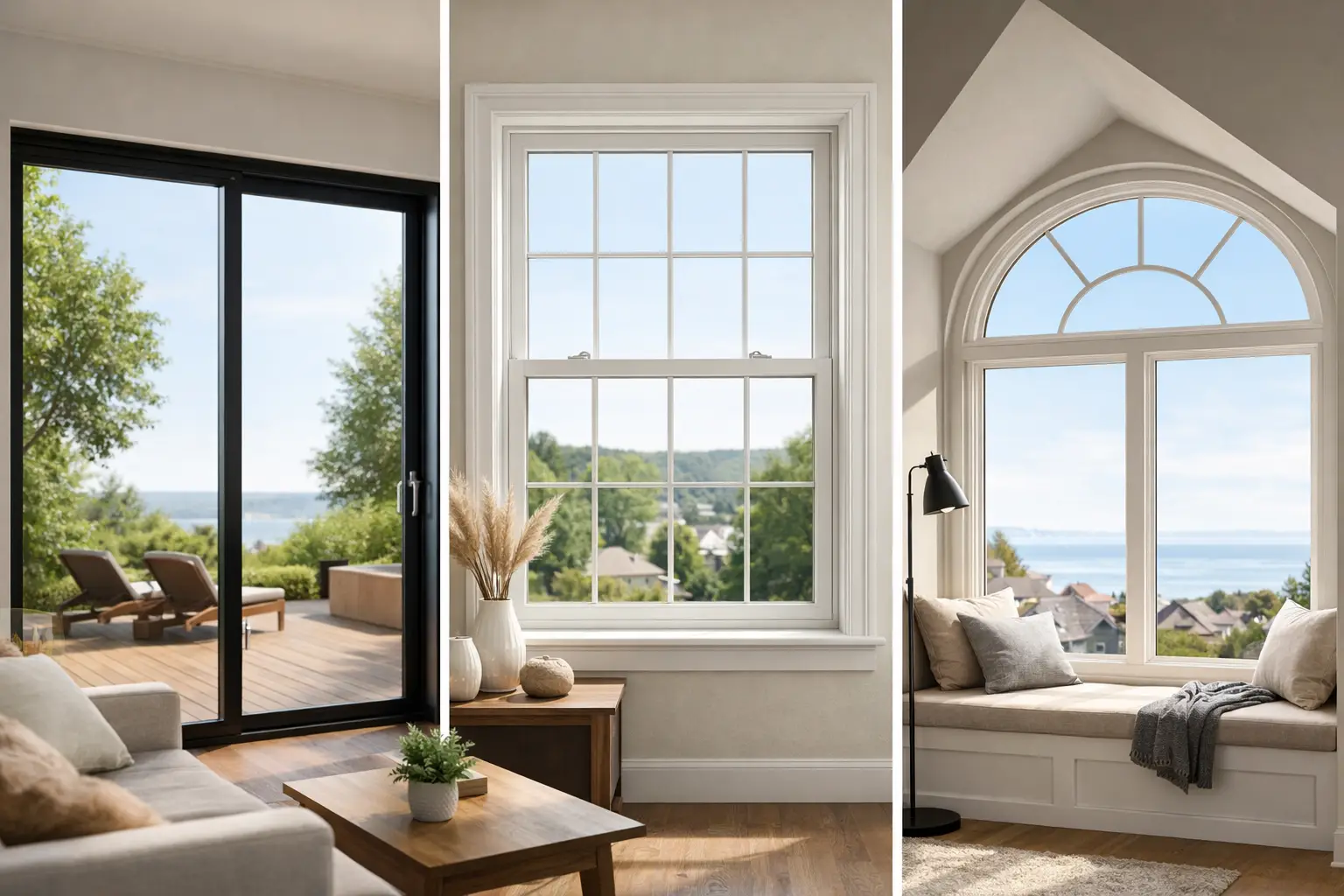
A street-facing ensuite, a front entry with sidelights, or a tight side-yard window should not force a choice between daylight and discretion. Privacy glass gives homeowners a more architectural answer than blinds, film, or permanently closed curtains. Specified properly, it protects sightlines while preserving light, thermal comfort, and the clean glazing lines that define contemporary residential design.
For premium renovations and custom homes, the decision is rarely just about making a pane opaque. The right glass must suit the room, the direction of the opening, the frame system, and the level of insulation expected from a high-performance window or door.
What Privacy Glass Actually Does
Privacy glass is a broad term for glazing designed to limit visibility through an opening. Some products diffuse the view in both directions, while others rely on reflectivity, tint, pattern, or electronically controlled opacity. These approaches create very different results.
Frosted and acid-etched glass scatters light, making shapes and movement visible but obscuring facial details and views. Textured or patterned glass works similarly, although the degree of obscurity depends on the pattern and the distance from the pane. Obscure glass is often the most dependable choice for bathrooms, entrance sidelights, laundry rooms, and windows near a neighbour’s property line because it performs consistently in daylight and after dark.
Reflective and tinted options are more conditional. They can reduce daytime visibility into a home when the exterior is brighter than the interior. At night, however, interior lighting can reverse the effect, allowing people outside to see in more easily. These glasses may be valuable for solar control and exterior appearance, but they should not be specified as the only privacy measure for a bedroom or bathroom.
Switchable privacy glass uses a laminated interlayer that changes from clear to opaque when electricity is applied. It offers an impressive visual effect and can suit high-end interiors where occupants want openness at one moment and screening at the next. It also requires power planning, controls, service access, and a realistic budget. For most exterior residential openings, conventional obscure glazing remains simpler and more durable as a privacy-first solution.
Privacy Glass Options for Different Rooms
The strongest specification begins with how a room is used, not with a sample viewed under showroom lighting. Glass that feels private in a bright display area may behave differently at a west-facing façade or under a pendant light at night.
Bathrooms and ensuites
Bathrooms need the highest level of visual screening, particularly on main floors and in urban or suburban side yards. Acid-etched, sandblasted, or heavily textured insulated glass units are typically the right fit. They admit useful daylight without creating a direct view through the opening.
Consider where the frosted surface sits within the insulated glass unit. In a sealed double- or triple-pane assembly, the decorative treatment is protected inside the unit rather than exposed to cleaning products, moisture, or abrasion. This is preferable to aftermarket film, which can lift at the edges, scratch, or affect the visual quality of the pane over time.
Front doors and sidelights
Entrance glazing needs privacy, but it also contributes to curb appeal and security. A refined textured glass can soften views into a foyer while allowing the entry to feel brighter and more welcoming. Reeded, fluted, linen, and contemporary linear patterns can complement both traditional and minimalist façades.
The pattern should be selected at full scale. A narrow texture may look nearly transparent from certain angles, while a deeper pattern provides stronger distortion. For door glazing, ask how the selected glass integrates with the door slab, insulated frame, multipoint locking hardware, and sidelights. The full assembly matters more than the decorative pane alone.
Street-facing living areas
Large living-room windows are usually installed to capture views and daylight, so fully obscured glazing can be the wrong answer. If the issue is direct visibility from a sidewalk or neighbouring driveway, a lower privacy zone can work well. This may mean obscure glass at the bottom portion of a fixed unit, a strategically positioned landscape screen, or interior shades paired with clear high-performance glazing.
This approach retains a visual connection to the sky and garden while protecting the portion of the room most exposed to outside sightlines. It is especially useful for oversized fixed windows and panoramic sliding systems, where preserving the view is a central design objective.
Home offices, stairwells, and interior partitions
Privacy glass also has a place inside the home. A frosted interior door can bring borrowed light into a corridor while separating a home office from family activity. Fluted glass can define a stair enclosure or room divider without making the interior feel compartmentalized.
Interior applications do not require insulated glass units, but safety glass may still be necessary in doors, sidelights, and other impact-prone locations. Tempered or laminated construction should be confirmed for the intended use.
Performance Still Matters in an Obscure Glass Unit
Privacy treatment should not reduce the performance standard of the window. In Southern Ontario, glass selection has a direct effect on perimeter comfort, condensation resistance, air-conditioning demand, and how close furniture can sit to the glazing during winter.
For exterior windows and doors, privacy glass should be specified within a high-performance insulated glass unit. A triple-pane package with argon-filled cavities, Low-E coatings, and warm-edge spacer technology can reduce heat loss and improve interior glass temperatures. That matters in a bathroom as much as in a living room. A warm interior pane is less likely to feel cold beside a tub or produce condensation during a cold spell.
Low-E coating position requires consideration with etched or patterned products. Some combinations affect visible light transmission, reflectivity, or the final appearance of the obscure surface. A technical glass sample and product data should be reviewed before fabrication, particularly when several window elevations must appear consistent from outside.
The frame is equally important. A high-performing PVC-U or thermally broken aluminum system supports the glass package with insulated chambers, durable seals, and stable glazing geometry. Installing premium privacy glass in a weak frame or poorly detailed opening will not deliver the intended comfort or weather performance.
Do Not Rely on Window Film for Every Project
Applied privacy film has a role in temporary upgrades, rental properties, and small interior applications. It is relatively accessible and can be replaced without changing the window. But it is not automatically equivalent to factory-finished obscure glass.
Film can create edge lines, bubbles, or an artificial appearance on large panes. It may also complicate warranty coverage if applied to an insulated glass unit not designed for that product. Dark solar-control films can increase thermal stress in certain glass configurations, particularly where panes receive strong sun exposure.
For a permanent renovation, factory-specified privacy glass gives a cleaner result because it is integrated into the glazing build-up from the start. It also allows the glass, spacer, coating, safety requirements, and frame system to be considered as one assembly.
How to Choose the Right Specification
Start with the privacy level needed at night, not only during the day. Stand at the likely viewing point outside the home and consider lights on indoors, seasonal changes in landscaping, and sightlines from neighbouring second-storey windows. If complete screening is required, choose an obscure treatment rather than a reflective finish.
Then assess what should remain visible. A shower window may need only diffuse daylight. A front door may benefit from recognizing a visitor as a silhouette. A great room may need privacy below eye level but clear glass above it. These distinctions lead to more refined results than treating every exposed opening identically.
Finally, match the glazing to the system and project standard. Confirm whether the unit will be double- or triple-pane, whether safety glazing is required, how the Low-E coating and pattern will interact, and whether the selected frame can accommodate the glass thickness. For large-format doors and architectural aluminum façades, this coordination should happen early, before dimensions and structural requirements are finalized.
At ECOWIN, privacy glazing is approached as part of the complete window or door specification, not as a decorative afterthought. That means balancing obscurity, thermal performance, safety, and the architectural character of the façade.
The best privacy glass does not announce itself as a compromise. It lets a bathroom feel brighter, an entry feel more composed, or a street-facing room feel comfortably protected while the window continues to do its real work: holding warmth, reducing outside noise, and framing the parts of the property worth seeing.