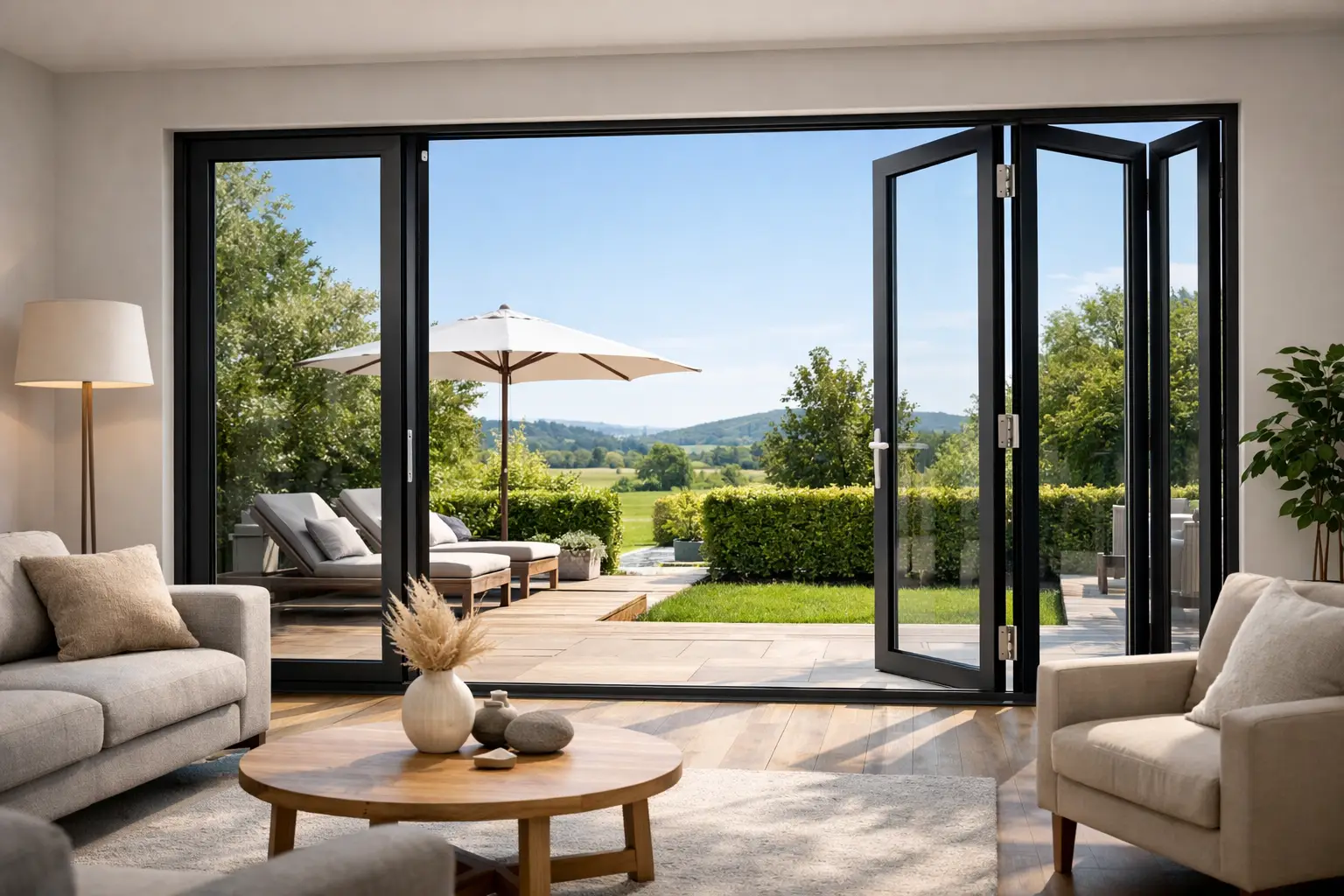
A narrow black frame around a wall of glass can transform a custom home. So can a quiet bedroom that stays warm beside a busy Southern Ontario road. Those are different design and performance priorities, which is why the PVC vs aluminum windows decision should begin with the opening, the architecture, and how the room needs to feel in January – not with material preference alone.
Premium PVC-U and thermally broken aluminum are both far removed from basic builder-grade windows. When specified with triple-pane insulated glass units, Low-E coatings, argon fill, warm-edge spacers, quality seals, and proper installation, either can deliver a significant upgrade in comfort, acoustics, security, and appearance. The better choice depends on where each system is used.
PVC vs Aluminum Windows: The Core Difference
PVC-U is a naturally insulating frame material. In European-format systems, multi-chamber profiles are reinforced where required, fitted with compression seals, and paired with high-performance glazing. The result is a frame that resists heat transfer effectively and supports excellent whole-window thermal performance.
Aluminum is structurally stronger and more rigid than PVC-U. That strength allows slimmer visible frame sections, larger glazed areas, and larger operable panels. Because aluminum conducts heat readily, premium residential systems rely on a substantial thermal break: an insulating barrier within the frame that separates the interior and exterior aluminum sections.
Neither material is automatically superior. A well-engineered aluminum system with a meaningful thermal break can perform exceptionally well. A premium reinforced PVC-U system can offer outstanding insulation and airtightness at a more accessible price point. Comparing only the frame material misses the larger specification: profile design, glazing package, hardware, sealing, installation detail, and opening size all matter.
Thermal Comfort in Canadian Winters
For homeowners replacing drafty double-pane units, frame insulation is often the first noticeable difference. PVC-U has an inherent advantage here. Its multi-chamber construction slows heat transfer, helping maintain warmer interior frame surfaces during cold weather. This can reduce the cold-radiation effect that makes a chair beside an older window feel uncomfortable even when the thermostat is set correctly.
Triple-pane glazing is central to this result. A high-performance IGU with Low-E coatings, argon-filled cavities, and warm-edge spacer technology reduces heat loss through the glass and helps manage condensation risk around the perimeter. The frame must support that glass package without becoming the weak point.
Thermally broken aluminum can also achieve strong energy performance, particularly in advanced architectural systems. Still, it is generally selected for its structural capacity and refined sightlines rather than because it is the easiest route to the highest insulation values. For standard-sized punched openings in bedrooms, living rooms, and renovations, premium PVC-U is frequently the more efficient thermal value.
For a large contemporary opening, however, aluminum may make the better whole-project decision. A thinner, stronger frame can preserve more glass, more daylight, and more view while safely carrying a heavier triple-pane unit. The right question is not simply which frame has the lower conductivity. It is whether the complete system meets the project’s thermal target without compromising the architecture.
Sightlines, Glass Size, and Architectural Expression
This is where aluminum earns its place in premium residential work. Its strength supports narrow profiles and larger spans, creating the clean, graphic lines associated with modern façades, corner glazing, oversized fixed windows, and panoramic sliding doors. On a view-oriented property, every millimetre removed from the visible frame can matter.
Aluminum also provides consistency across complex elevations. A home with expansive fixed glazing, tall terrace doors, slim mullions, and large sliding panels benefits from a unified architectural language. Dark finishes, especially black and charcoal, tend to look particularly crisp in aluminum systems because the frame can remain slender at substantial sizes.
PVC-U profiles are typically deeper and visually broader, particularly when reinforcement is needed. That is not necessarily a drawback. On traditional, transitional, and many contemporary homes, the frame proportions can look substantial and appropriate. PVC-U also works well for renovations where openings are moderate in size and thermal comfort is the leading priority.
The limitation appears when the design calls for unusually large panes, minimal framing, or very wide moving panels. For these applications, forcing PVC-U beyond its natural comfort zone can create compromises in frame bulk, panel size, and long-term operation. Aluminum is usually the more disciplined specification.
Durability, Movement, and Daily Operation
Both materials can provide long service life when manufactured properly and installed correctly. The details differ. PVC-U expands and contracts more with temperature changes, so quality system design, reinforcement, welding, drainage, and installation allowances are essential. Premium European profiles are engineered around these realities rather than treating them as afterthoughts.
Aluminum is exceptionally stable and rigid. This makes it well suited to tall windows, heavy glass, large sliding doors, and openings exposed to wind. It also gives hardware a stable platform, which is valuable for panels that are opened frequently or carry substantial glass weight.
Operation should be assessed at the system level. European tilt-and-turn PVC-U windows can offer excellent compression sealing, ventilation control, and security. High-end aluminum casements, tilt-turn units, lift-and-slide doors, and pivot doors can perform with equal precision when specified with appropriate hardware. A beautiful frame is not enough if the handle action, locking points, drainage, and threshold detail are not suited to the way the opening will be used.
Acoustics and Security: Glass Is Only Part of the Story
Triple-pane windows can make a meaningful difference near traffic, rail corridors, or active neighbourhood streets, but acoustic performance is not determined by the number of panes alone. Glass thickness, asymmetric pane configuration, laminated glass, airspace depth, frame stiffness, and airtight installation all influence what reaches the room.
PVC-U’s multi-chamber profile and compression seals can contribute to a very quiet interior. Aluminum systems can also achieve strong acoustic results, especially where their rigidity supports large, heavy acoustic glass packages. For a home beside a major road, the glazing build-up should be designed around the noise profile rather than selected from a standard menu.
Security follows the same principle. Reinforced profiles, multi-point locking, secure hardware, laminated glass where appropriate, and disciplined installation work together. Premium PVC-U and aluminum systems can both be highly secure. Large ground-floor sliders and entry-adjacent glazing may justify upgraded glass and hardware regardless of frame material.
Cost: Where the Premium Goes
At comparable opening sizes and glazing specifications, premium PVC-U is usually less expensive than thermally broken aluminum. That makes it a compelling choice for a whole-home window replacement where comfort, energy performance, and sound reduction are the priorities.
Aluminum costs more because the systems are more structurally demanding and are often used in more complex applications. Large glass sizes, specialized finishes, heavy-duty hardware, engineered mullions, and panoramic sliding configurations add to the investment. The expense is justified when those capabilities are necessary to achieve the design.
A mixed-material strategy is often the smartest answer. Use high-performance PVC-U windows for standard openings where insulation and value lead the decision. Reserve aluminum for the rear elevation, principal living space, oversized fixed units, entry compositions, or sliding walls where slim sightlines and scale are essential. This approach avoids paying for aluminum capacity where it adds little while protecting the architectural moments where it matters most.
How to Specify the Right System
Start by separating the project into opening types rather than choosing one material for the entire house. Consider the size and orientation of each opening, exposure to wind and weather, required glass thickness, desired frame colour, ventilation needs, and whether the room faces traffic or a valued view.
Then review whole-window performance rather than a centre-of-glass number. Ask how the system handles triple-pane glass, where reinforcement is used, what thermal break is incorporated in aluminum frames, how many sealing planes the sash has, and how the unit will be installed at the wall. A high-performance window can lose much of its advantage through poor perimeter sealing or careless flashing details.
For custom projects, frame samples and elevation drawings are valuable decision tools. They reveal the true sightline, mullion proportion, handle placement, operable panel size, and relationship between fixed and opening units. ECOWIN regularly helps clients make these distinctions before fabrication, when changing the specification is straightforward rather than costly.
The best window material is the one that serves the room honestly. Choose PVC-U when you want exceptional warmth, quiet, and high performance across conventional openings. Choose aluminum when the home calls for larger glass, slimmer profiles, structural confidence, and a more architectural expression. A carefully mixed specification often delivers the most convincing result: comfortable rooms everywhere, with expansive views exactly where the design deserves them.