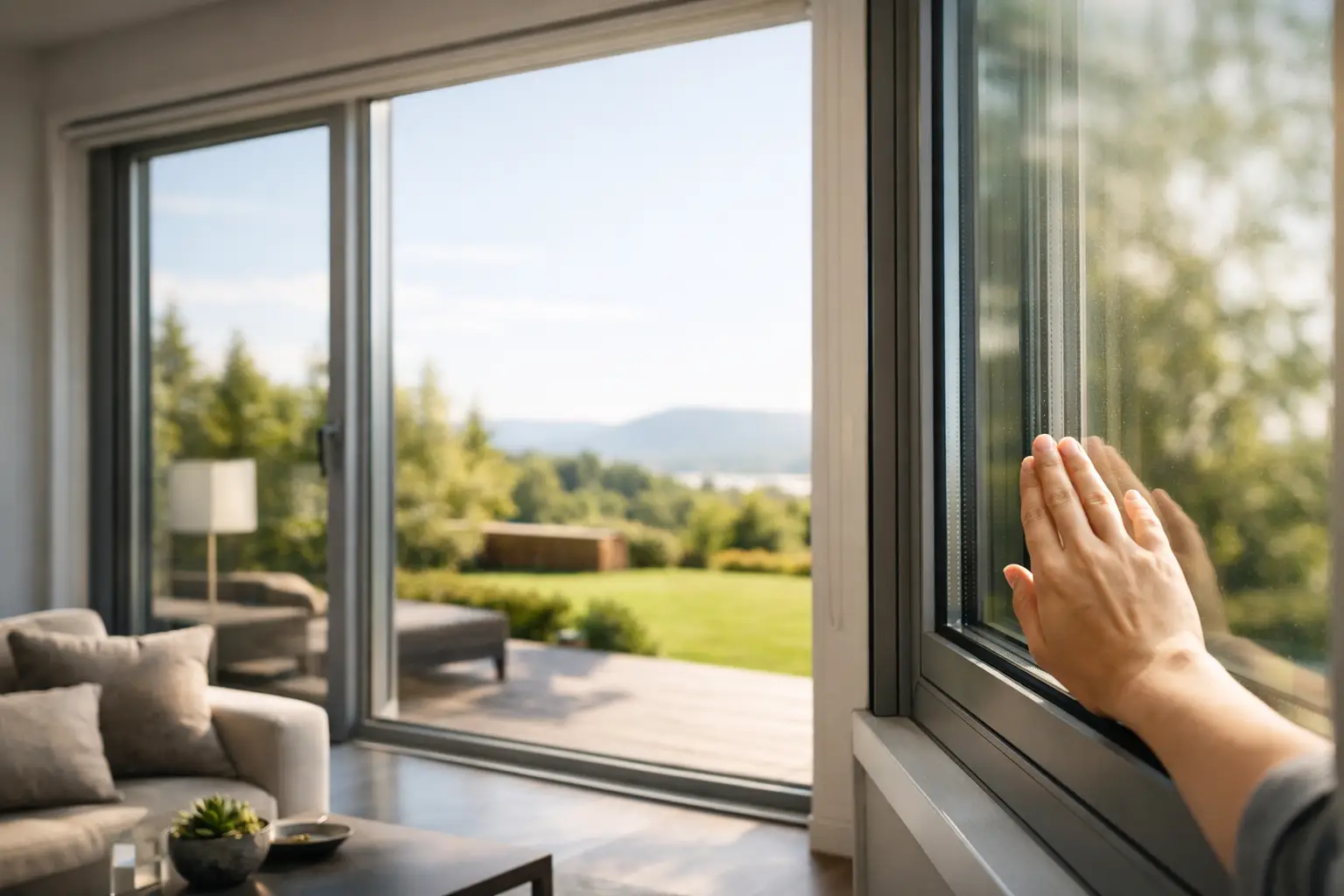
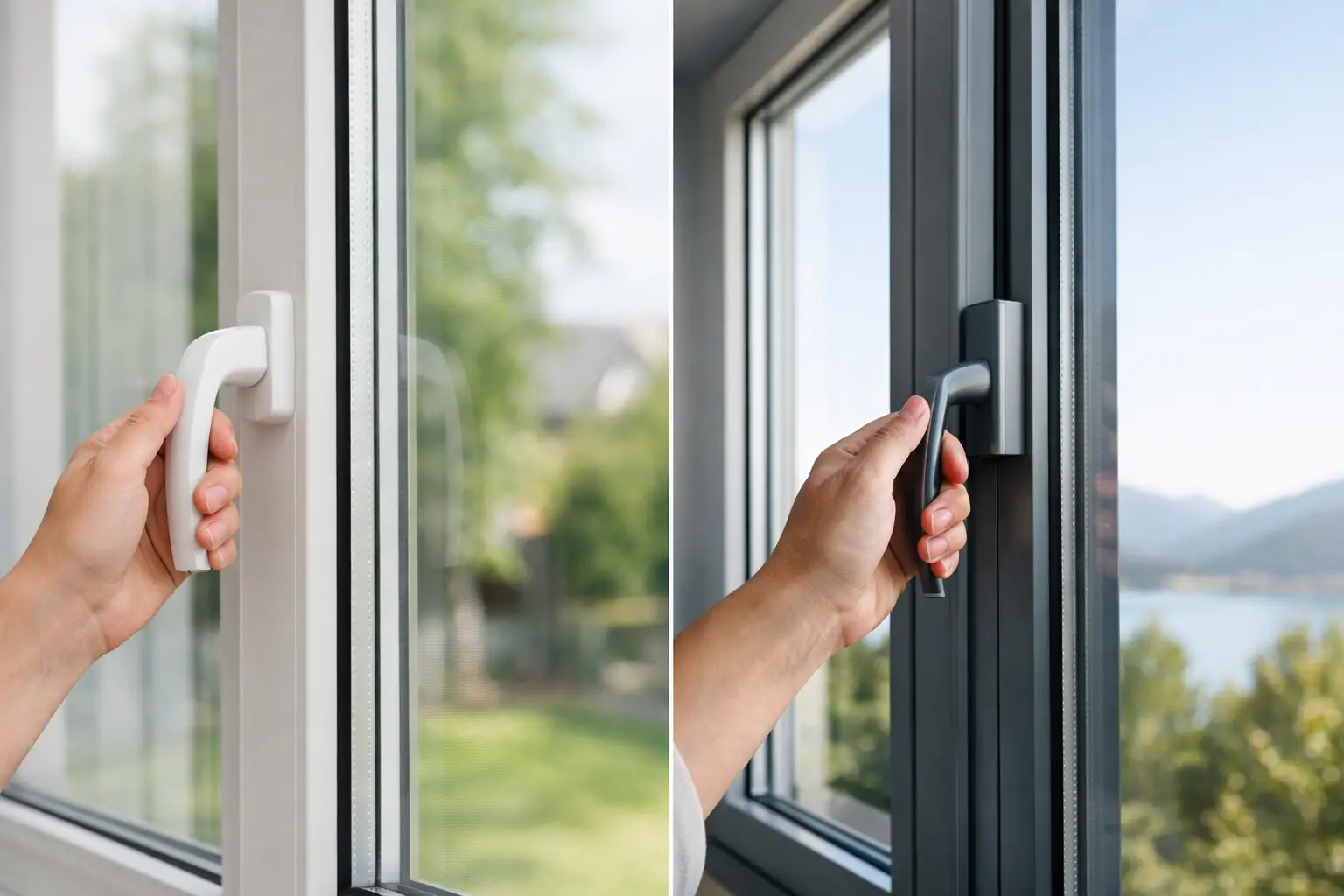
A rear addition with a 16-foot opening can look spectacular on a plan, but the wrong door system can turn that opening into a daily compromise. The lift and slide vs bifold decision affects how much glass you see when the doors are closed, how freely the space opens in summer, how the threshold performs in winter, and how the room feels every day of the year.
For high-performance homes in Southern Ontario, this is not simply a choice between two attractive patio doors. It is a choice between two different operating principles. A lift-and-slide door is designed to carry very large glass panels with controlled movement and strong perimeter seals. A bifold door uses a series of narrower panels that fold and stack to clear a broad opening. Both can be specified at an architectural level, but they excel under different conditions.
Lift and slide vs bifold: the fundamental difference
A lift-and-slide system moves large panels horizontally on a purpose-built track. When the handle is turned, the active panel lifts slightly off its compression seals and rolling mechanism, allowing it to slide with relatively little effort. When closed, the panel lowers into position, pressing the seals together around the frame. This lift-and-seal action is a major reason premium European systems can achieve excellent air and weather performance at large sizes.
A bifold system consists of multiple hinged panels connected by rollers. The panels slide along a track, then fold and stack to one or both sides of the opening. The result is a much wider unobstructed passage than a conventional sliding door can provide. Depending on the configuration, a bifold can open nearly the full width of the framed opening.
The visual distinction is immediate. A lift-and-slide door presents fewer, wider panes and slimmer sightlines across a panoramic view. A bifold introduces more vertical frame lines because every panel requires its own stile and hinge connection. When the doors are open, however, the bifold creates the more dramatic indoor-outdoor opening.
Choose lift-and-slide for glass, views and year-round comfort
For clients prioritizing a long, uninterrupted view of a garden, ravine, lake, or cityscape, lift-and-slide is often the stronger architectural choice. Large panels reduce visual breaks, allowing the glazing to read more like a transparent wall than a collection of doors. In a modern custom home, that quieter elevation can be as valuable as the opening itself.
Lift-and-slide systems are also well suited to oversized openings. Premium aluminum systems can accommodate substantial panel dimensions and heavy triple-pane insulated glass units. This matters because high-performance glazing is not light. A properly engineered lifting and rolling mechanism makes it practical to use larger, thermally efficient panels without making operation feel cumbersome.
Closed-door performance is another advantage. Quality lift-and-slide systems use continuous compression gaskets and carefully designed drainage paths. With an insulated frame, warm-edge spacer technology, Low-E coatings, argon-filled chambers, and a well-specified triple-pane IGU, the result can be a noticeably warmer interior surface during a Canadian winter. That helps reduce drafts near the opening and makes a seating area beside the glass more comfortable.
Acoustic performance also tends to favour lift-and-slide configurations, particularly where the home faces a busy road or active neighbourhood. Fewer panel joints generally mean fewer potential paths for airborne sound. Glass composition, frame construction, and installation details remain decisive, but a large sliding system can offer a strong starting point for a quieter room.
There is a practical limitation: a standard two-panel lift-and-slide door only opens roughly half of its total width. Multi-panel and pocketing configurations can increase the clear opening, but the fixed or parked panels still occupy part of the elevation. If the project calls for a fully open transition from kitchen to terrace, that limitation deserves serious attention early in design.
Where lift-and-slide works best
A lift-and-slide door is especially effective when the opening frames an important view, when winter comfort is a priority, or when the door will be closed more often than it is fully open. It suits contemporary rear elevations, living rooms, primary bedrooms, and dining spaces where expansive glazing carries the architectural concept.
It is also a logical choice for homeowners replacing a standard builder-grade patio door. The improvement is not limited to appearance. A properly specified European-format sliding system can improve air tightness, reduce cold spots, increase glass area, and provide hardware designed for the weight and frequency of real daily use.
Choose bifold for the widest possible opening
A bifold door earns its place when the open-door experience is the priority. Fold the panels to the side and the boundary between interior and exterior becomes far less defined. For a kitchen opening directly onto a covered patio, outdoor kitchen, or pool area, that clear passage can change how the home functions during the warmer months.
Bifolds are particularly compelling where entertaining drives the brief. They allow people to move between the house and terrace without passing through a narrow sliding-door opening. Many configurations can include a traffic door, meaning one panel operates like a conventional hinged door for quick access without folding the entire system.
The trade-off is complexity. Each panel introduces hinges, seals, rollers, alignment points, and vertical meeting stiles. Premium bifolds are engineered to manage these details well, but they demand accurate manufacturing, a structurally sound opening, and precise installation. A poorly installed bifold can show its weaknesses quickly through difficult operation, uneven panel gaps, water entry, or premature hardware wear.
Thermal and air performance can be very good in a high-end bifold, especially with thermally broken aluminum or reinforced PVC-U profiles and triple-pane glazing. Still, the system has more joints than a lift-and-slide door. For a highly exposed elevation or a home pursuing exceptional envelope performance, review the actual tested air, water, structural, and thermal values for the exact configuration rather than relying on broad product claims.
Where bifolds work best
Bifolds make sense when an opening needs to function as an event space rather than simply a view. They are well suited to dining rooms that open onto a terrace, garden rooms, covered outdoor living areas, and renovations where the owner wants the ability to remove almost the entire wall on demand.
They can also be the better option where a moderate-width opening must become fully accessible. A three- or four-panel bifold can create a generous opening without requiring the larger overall span often associated with panoramic sliding systems. The stacked panels do require parking space at one or both sides, so furniture placement, exterior cladding returns, and wall conditions need to be coordinated before finalizing the layout.
Performance depends on more than the operating style
It is easy to compare lift-and-slide and bifold doors as if the mechanism alone determines quality. In practice, the system specification matters just as much. Frame material, thermal breaks, reinforcement, glazing build-up, hardware, threshold design, and installation all influence the result.
For Southern Ontario projects, start with the glass package. Triple-pane insulated glass, dual Low-E coatings, argon fill, and warm-edge spacers are often appropriate for large glazed openings, particularly on north, east, or exposed elevations. Solar gain should also be considered. A west-facing wall of glass may benefit from a different coating strategy than a shaded north-facing rear addition.
Threshold selection is equally important. Flush or low-profile thresholds can create an elegant transition and improve accessibility, but drainage and weather exposure must be evaluated carefully. A protected opening below a roof overhang has different requirements from a wind-driven rain exposure facing an open yard. The best detail is not always the lowest threshold. It is the one that balances access, water management, and long-term reliability.
Installation deserves the same scrutiny as the door itself. Large-format systems need correct structural support, plumb and level framing, properly designed sill conditions, continuous air sealing, and integration with the wall’s water-management layer. Premium hardware cannot compensate for a weak rough opening or an improvised sill pan.
The decision points that actually matter
If your priority is a clean panoramic elevation, fewer sightlines, strong closed-door comfort, and the ability to specify very large glass panels, lift-and-slide is usually the better investment. It delivers a composed architectural look that remains impressive in every season, including the months when the doors stay closed.
If the goal is to turn a room into an open-air entertaining space several months of the year, a bifold offers a type of access a sliding system cannot fully match. The price for that flexibility is more visible framing, more moving components, and a greater need for disciplined design and installation.
Budget should be considered in terms of complete scope, not only door cost. Structural changes, steel support, drainage detailing, electrical relocation, finishes, and exterior hardscaping can be significant on either option. Bifolds may require more careful consideration of stacked-panel space, while oversized lift-and-slide systems can require specialized handling, support, and glazing logistics.
A well-designed opening should feel intentional when it is closed on a February evening and when it is open for a July dinner. Review the actual door configuration, glass specification, exposure, sill detail, and intended use before choosing. That is where an architectural opening becomes a lasting part of the home rather than an expensive feature that only looks good in photographs.