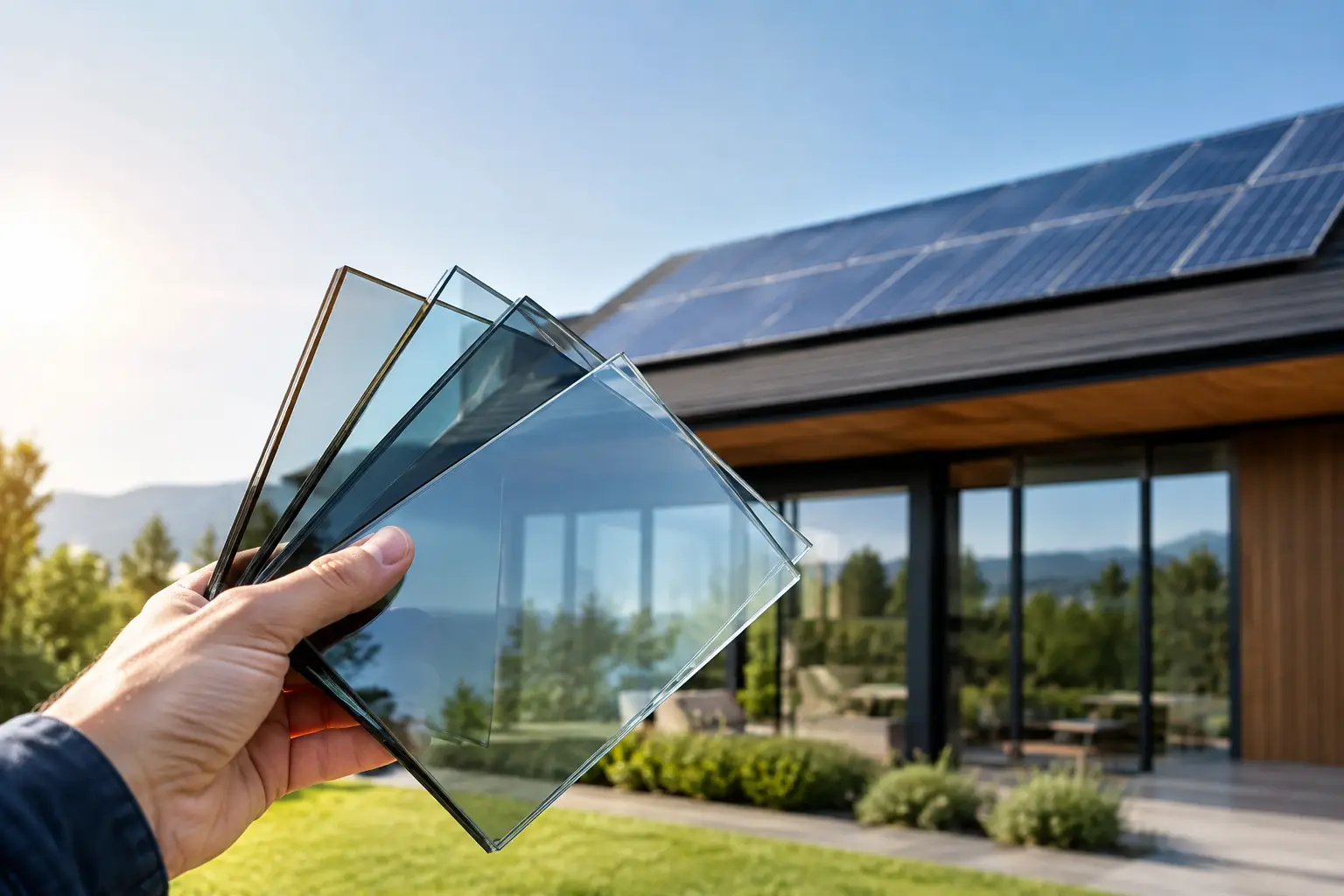
A street-facing ensuite, a front entry with sidelites, and a home overlooking a close neighbour all need privacy. They do not need the same glass. The best privacy glass options preserve daylight and architectural clarity while controlling sightlines, supporting thermal performance, and fitting the window or door system properly.
For a premium renovation or custom build, privacy should be specified as part of the glazing package, not treated as an afterthought. Glass texture, coating, tint, safety construction, and insulated glass unit design each affect how a room feels and performs through a Southern Ontario winter.
What privacy glass should achieve
Privacy glass is often selected for one simple reason: to stop people from seeing in. That is only the starting point. A well-chosen unit should diffuse or block views without making an interior feel enclosed, reduce glare where necessary, and maintain the clean proportions of the window or door.
The specification also has to work with the opening. A fixed bathroom window can accept a broad range of decorative glazing. A large patio door, operable casement, or insulated entrance door needs glass that meets requirements for weight, safety, weather resistance, and long-term seal performance. In a high-performance assembly, privacy glass should sit within a properly engineered double- or triple-pane IGU, with Low-E coatings, argon fill where appropriate, and warm-edge spacers.
Exterior conditions matter as well. Glass that provides strong daytime privacy may become highly transparent at night when interior lights are on. This is a frequent surprise in urban homes and should be addressed early with the right glass type, window placement, or interior shading strategy.
Best privacy glass options by application
Frosted and acid-etched glass
Frosted glass is the most versatile choice for bathrooms, laundry rooms, side-yard windows, door sidelites, and interior partitions. Rather than simply darkening the view, it scatters light across the surface. The result is a bright, soft illumination with a consistent level of obscurity.
Acid-etched glass is generally the more refined architectural option. Its satin finish looks clean in contemporary homes and is less likely to appear like an applied film. It can be specified as a full panel or with clear sections, bands, or geometric patterns that align with the home’s façade.
Its trade-off is visibility. Frosted glass removes detail but still reveals movement and silhouettes at close range, particularly after dark. For a ground-level bathroom facing a walkway, a higher obscurity level or a combination of etched glass and thoughtful sill height may be preferable.
Patterned, reeded, and fluted glass
Patterned glass introduces privacy with more visual character. Reeded or fluted glass, for example, creates vertical texture that complements modern aluminum doors, steel-look partitions, and minimalist interiors. Other patterns range from subtle linear textures to more traditional decorative motifs.
This option works particularly well where the glass is meant to be seen up close: entrance door inserts, transoms, pantry doors, stairwell windows, and room dividers. It delivers more depth than plain obscured glass while allowing generous daylight.
Not every pattern provides the same concealment. Wide flutes can distort a view without fully blocking it, while denser patterns create stronger privacy. Ask to see a full-size sample outdoors and indoors. A small swatch cannot show how a pattern behaves across a large glazed panel or under evening lighting.
Laminated privacy glass
Laminated glass uses two panes bonded around an interlayer. That interlayer can be clear, tinted, opaque, or decorative, making laminated glass a strong option when privacy and safety need to work together. If broken, the fragments remain held in place by the interlayer, which is valuable near doors, low-level glazing, and larger panels.
For front entries and street-facing windows, laminated obscured glass can provide a more secure, substantial solution than standard decorative glass. Acoustic interlayers can also help reduce traffic and neighbourhood noise, an advantage for homes near busy roads.
Laminated construction is heavier and can increase the cost of the glazing package. It must be matched to the hardware capacity and profile system, especially in large operable sashes. This is not a reason to avoid it. It is a reason to have the complete window or door engineered as one system.
Tinted and reflective glass
Tinted glass reduces visible light and can soften views from outside during daylight hours. Grey, bronze, and other neutral tints can be attractive on modern façades, particularly in broad expanses of glazing where a consistent exterior appearance matters.
Reflective coatings create a stronger mirror-like effect in daytime conditions. They can help with glare and solar control on exposed elevations, but they are not a complete privacy solution. Once the interior is brighter than outdoors, typically at night, the effect reverses and the room can become visible from outside.
For that reason, tinted or reflective glass is best treated as a solar and aesthetic decision with some daytime privacy benefits. It is not the right stand-alone answer for a bedroom, bathroom, or entry that needs reliable privacy around the clock.
Switchable smart glass
Switchable glass uses an electrically activated layer that changes from clear to opaque on demand. In its opaque state, it offers immediate visual privacy while still admitting light. When clear, it preserves an open view and a more expansive feel.
This technology suits high-end applications where flexibility matters: ensuite partitions, home offices, interior glass walls, and select feature windows. It can be particularly effective in contemporary homes that use glazing to divide spaces without sacrificing light.
The premium cost, electrical coordination, and control requirements make switchable glass a specialized choice. It should be planned early, especially when used within insulated exterior glazing. For most exterior windows, a fixed obscured glass specification provides better value and fewer technical variables.
Selecting privacy glass for exterior windows and doors
The right choice begins with the viewing angle, not the room name. Stand where a pedestrian, neighbour, or visitor would stand, then consider what they can see at ground level and from nearby upper floors. A window that seems private from the interior may be exposed from an adjacent deck or second-storey home.
Next, consider daylight. Full obscurity is appropriate for many bathrooms, but a living area often benefits from clear upper glazing combined with privacy below. A transom can bring in sky light while a textured lower panel protects sightlines. In a front door, a narrow vertical clear lite can provide awareness of visitors without exposing the entry hall.
For new windows and doors, avoid applying residential window film as the default solution. Film can be useful in limited retrofit situations, but it may affect glass appearance, offer incomplete night privacy, and create warranty concerns if it is not compatible with the insulated glass unit. Factory-specified privacy glazing is usually cleaner, more durable, and better integrated with the overall performance package.
Do not compromise the thermal package
Privacy glass should not force a downgrade from a high-performance window. The most comfortable homes pair the chosen decorative or obscured pane with the same core principles used for clear glazing: Low-E coatings selected for the orientation, insulated airspaces, argon gas fill, warm-edge spacer technology, and a thermally efficient frame.
Triple-pane glazing is especially valuable in bedrooms, bathrooms, and large exposed openings where occupants sit close to glass. It helps raise interior glass temperatures in winter, reducing the cold-radiant sensation and risk of interior condensation. A privacy treatment can control views, but only a properly specified window system addresses drafts, cold edges, and heat loss.
For oversized glazing, the structural and thermal details become more demanding. Glass weight, panel deflection, wind load, drainage, and hardware all need to be considered alongside privacy. European PVC-U and architectural aluminum systems are well suited to these specifications when the profile, glazing thickness, and installation method are selected as a coordinated package.
A clearer way to make the final choice
Choose acid-etched or frosted glass when consistent privacy and soft daylight are the priority. Choose patterned or reeded glass when texture is part of the architectural concept. Choose laminated privacy glass where security, safety, or acoustic control strengthens the brief. Use tint and reflectivity for daylight glare and façade character, while recognizing their night-time limitations. Reserve switchable glass for spaces where adjustable privacy justifies a more complex specification.
The best result is rarely the most opaque pane available. It is the glass that gives the room enough light, the façade the right level of refinement, and the homeowner privacy without giving up thermal comfort. For a premium window or door project, ECOWIN can help translate those priorities into a glazing package that performs as convincingly as it looks.