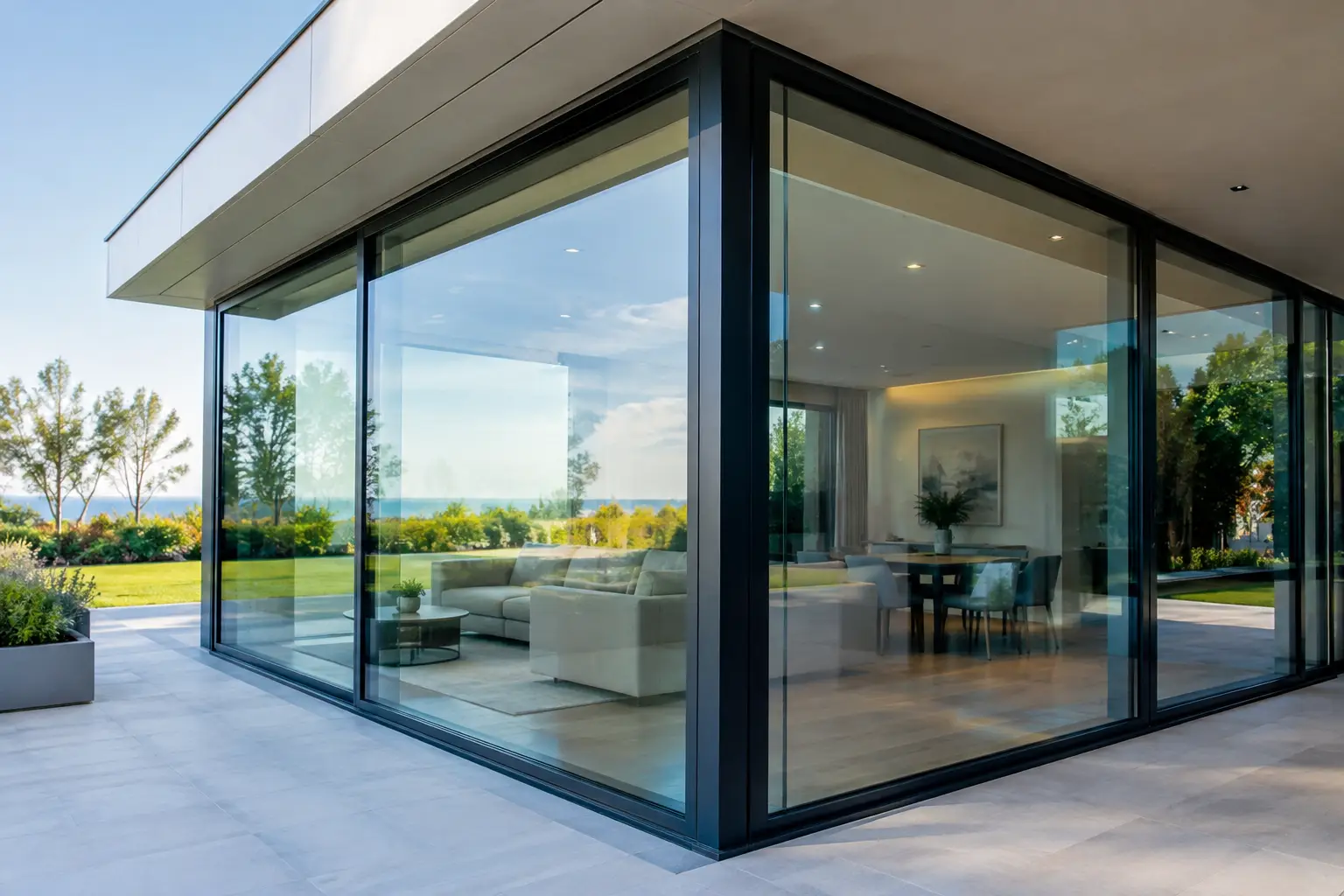
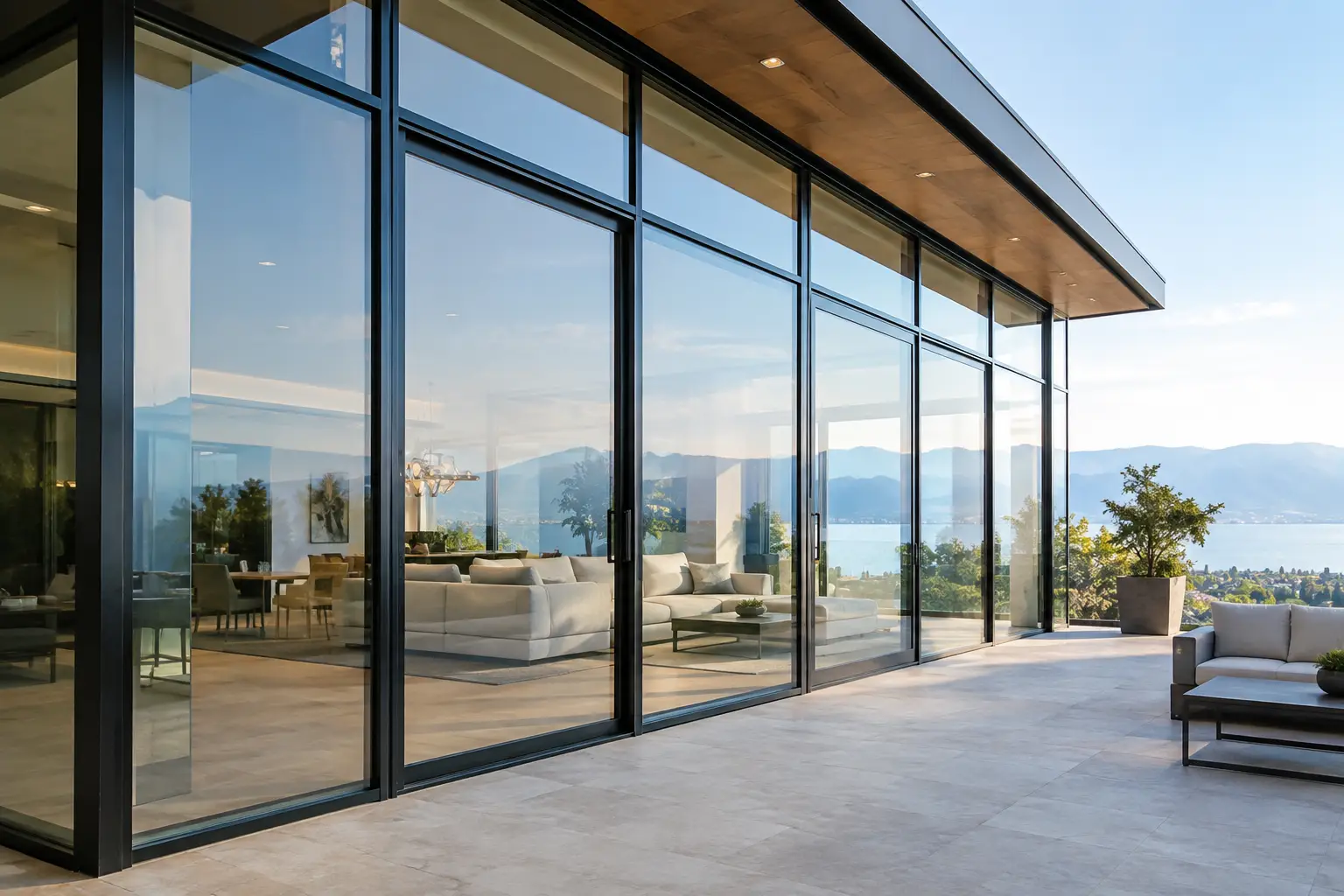
A south-facing wall of glass can make a custom home feel exceptional in February and uncomfortable in July. That is why solar glass selection is not simply a question of choosing clear, tinted, or triple-pane glazing. It is the process of matching glass coatings, solar heat gain, visible light, orientation, frame system, and shading strategy to the way a home is designed and occupied.
For premium renovations and custom builds, glass often represents the largest area of the exterior envelope. Its specification will affect room temperature near the window, glare on finished surfaces, air-conditioning demand, privacy, and the quality of the view. The right glazing package makes large openings feel calm and usable throughout the year. The wrong package can leave a beautifully designed room too hot, too dim, or too cold at the perimeter.
What Solar Glass Selection Actually Controls
Solar glass does not necessarily mean photovoltaic glass. In residential fenestration, it usually refers to glazing engineered to manage solar radiation while maintaining useful daylight and visual clarity. The most influential part of the specification is usually the Low-E coating: a microscopically thin, transparent metallic layer applied inside the insulated glass unit.
A Low-E coating can reflect long-wave heat back toward the interior, helping retain warmth during Southern Ontario winters. It can also reduce the amount of solar energy admitted through the glass. The balance between those two outcomes depends on the coating chosen and the glass unit construction.
Three ratings make the discussion more precise. U-factor measures how readily a window loses heat – lower is better. Solar heat gain coefficient, or SHGC, indicates how much solar energy passes through the glazing – a higher number admits more solar gain. Visible transmittance, or VT, describes how much usable daylight enters – a higher number produces a brighter interior.
These values should be read together. A very low SHGC can reduce summer overheating, but it may also limit welcome winter solar gain in a south-facing living space. High visible transmittance can preserve a clear, open appearance, yet it may require more deliberate glare control around work areas, televisions, and reflective stone or wood finishes.
Solar Glass Selection Starts With Orientation
A single glass package across every elevation is convenient, but it is not always the best-performing solution. Large homes with panoramic glazing often benefit from elevation-specific thinking.
South-facing glazing
South exposure receives the strongest solar energy over the course of the year. In a well-designed home, moderate solar gain can support winter comfort and reduce reliance on heating during sunny periods. The trade-off is summer heat and glare, especially where the glass is tall, unshaded, or paired with dark flooring that absorbs heat.
For a south-facing great room, the best answer may be a balanced Low-E coating with a moderate SHGC, paired with architectural overhangs, exterior screens, pergola louvers, or interior shades. Fixed shading is particularly effective when it is designed around the seasonal sun angle: it can block high summer sun while allowing lower winter sun to enter.
West-facing glazing
West-facing glass deserves special attention. Late-afternoon summer sun arrives at a low angle, carries significant heat, and is difficult for roof overhangs to block. It can make a kitchen, bedroom, or family room uncomfortable just when the space is most used.
A lower-SHGC solar-control coating is often appropriate on this elevation, particularly for large sliders and floor-to-ceiling fixed units. Exterior shading remains the most effective supplement because it stops solar energy before it reaches the glass. If the project calls for uninterrupted views, coating selection becomes even more critical.
East-facing glazing
East glass typically experiences lower solar intensity than west glass, but morning glare can be disruptive in bedrooms, breakfast areas, and home offices. A balanced glazing package is often sufficient, although a lower-SHGC option may be justified where openings are oversized or the room has limited shading.
North-facing glazing
North elevations receive little direct sun, so heat retention and clear daylight are usually the priorities. High-performance triple-pane insulated glass units with appropriate Low-E coatings, argon fill, and warm-edge spacers help maintain a warmer interior glass surface. That matters near seating areas and in rooms with expansive windows, where occupants can otherwise feel radiant chill even when the thermostat is set correctly.
Do Not Specify Glass Without the Window System
Glass performance is only one part of the opening. A high-spec triple-pane IGU cannot compensate for an underperforming frame, weak weather seals, poor installation, or an oversized system that lacks adequate reinforcement.
Premium PVC-U profiles, thermally broken aluminum systems, and advanced steel or aluminum façades each manage heat differently. The frame-to-glass ratio also changes the final result. A narrow aluminum sightline may deliver a more expansive view, but the frame must be properly thermally broken and engineered for the climate. A reinforced European PVC-U system can offer excellent insulation and air tightness, although its visual proportions are different.
Ask for whole-window performance rather than center-of-glass numbers alone. Center-of-glass U-factor measures only the middle of the sealed unit. Whole-window values account for the frame, edge of glass, spacer, and sash construction – the components that influence real installed performance.
For large lift-and-slide doors, corner glazing, and oversized fixed windows, structural requirements also shape the glass package. Glass thickness, tempered safety glass, laminated interlayers, mullion design, and deflection limits must be coordinated before fabrication. A premium installation partner should treat these as architectural and engineering decisions, not add-ons selected after the opening is framed.
Triple-Pane Glass Is a Strong Starting Point, Not a Complete Specification
For high-performance homes in cold climates, triple-pane glazing is often the right baseline. A typical unit uses three panes of glass, two sealed cavities, argon gas fill, Low-E coatings, and warm-edge spacer technology. Compared with standard builder-grade double-pane glazing, it can reduce heat loss, improve interior glass temperatures, and provide noticeably better acoustic separation.
But triple-pane does not automatically mean the same solar performance. Two triple-pane units may have very different SHGC and VT values based on coating placement and glass make-up. One may prioritize winter gain and daylight; another may be designed to suppress cooling loads and glare.
Acoustic performance can also influence the decision. If a home faces traffic, rail activity, or a busy neighbourhood street, laminated glass or asymmetrical pane thicknesses may improve sound reduction. Those choices can affect weight, colour, cost, and visible transmittance, so they should be evaluated alongside thermal requirements.
Colour, Reflection, and the View Out
Architectural glass should look as good from the exterior as it performs from the interior. Solar-control coatings can introduce subtle exterior reflection or a slight neutral, blue, grey, or green cast. These differences are often modest, but they become visible across a broad façade and should be reviewed against cladding, roofing, and neighbouring windows.
Dark tints can control brightness and solar gain, but they may make interiors feel less open on overcast days. Highly reflective glass can offer privacy during daylight hours, yet it may create an appearance that conflicts with a warm residential façade. It also does not provide privacy after dark when the interior is illuminated.
For view-oriented properties, ask to see full-size glass samples outdoors. Small showroom samples are useful, but they cannot fully show reflection, colour rendering, or the way a coating looks against sky, trees, water, and masonry. This is especially valuable when combining fixed picture windows with operable units, sliding doors, and large-format corner systems.
A Better Specification Conversation
The most productive solar glass discussion begins with the room, not a generic glass upgrade. Consider how the space faces, when it is occupied, whether exterior shading is possible, the size of the opening, and what sits directly inside it. A west-facing media room, a north-facing bedroom, and a south-facing double-height great room should not automatically receive the same glazing.
Bring finish selections into the conversation early. Wide-plank flooring, natural stone, dark cabinetry, artwork, and leather furniture can all respond differently to direct sun and ultraviolet exposure. Modern Low-E coatings help reduce UV transmission, but they do not eliminate all fading risk. Where sensitive finishes are close to glass, solar control and shading should be considered together.
Cost should be evaluated over the life of the opening rather than as a line item removed at tender stage. Glass is difficult and expensive to change once a façade is complete. Selecting the right insulated unit at the design stage is usually more economical than trying to correct glare, overheating, or cold glass surfaces with aftermarket films and improvised blinds.
The strongest projects use glass deliberately: clearer where daylight and views matter most, more solar-controlled where exposure demands it, and always matched to a high-performance frame and precise installation. A well-specified window should disappear into daily life, leaving the room warmer in winter, quieter near the street, and comfortable when the afternoon sun reaches the glass.