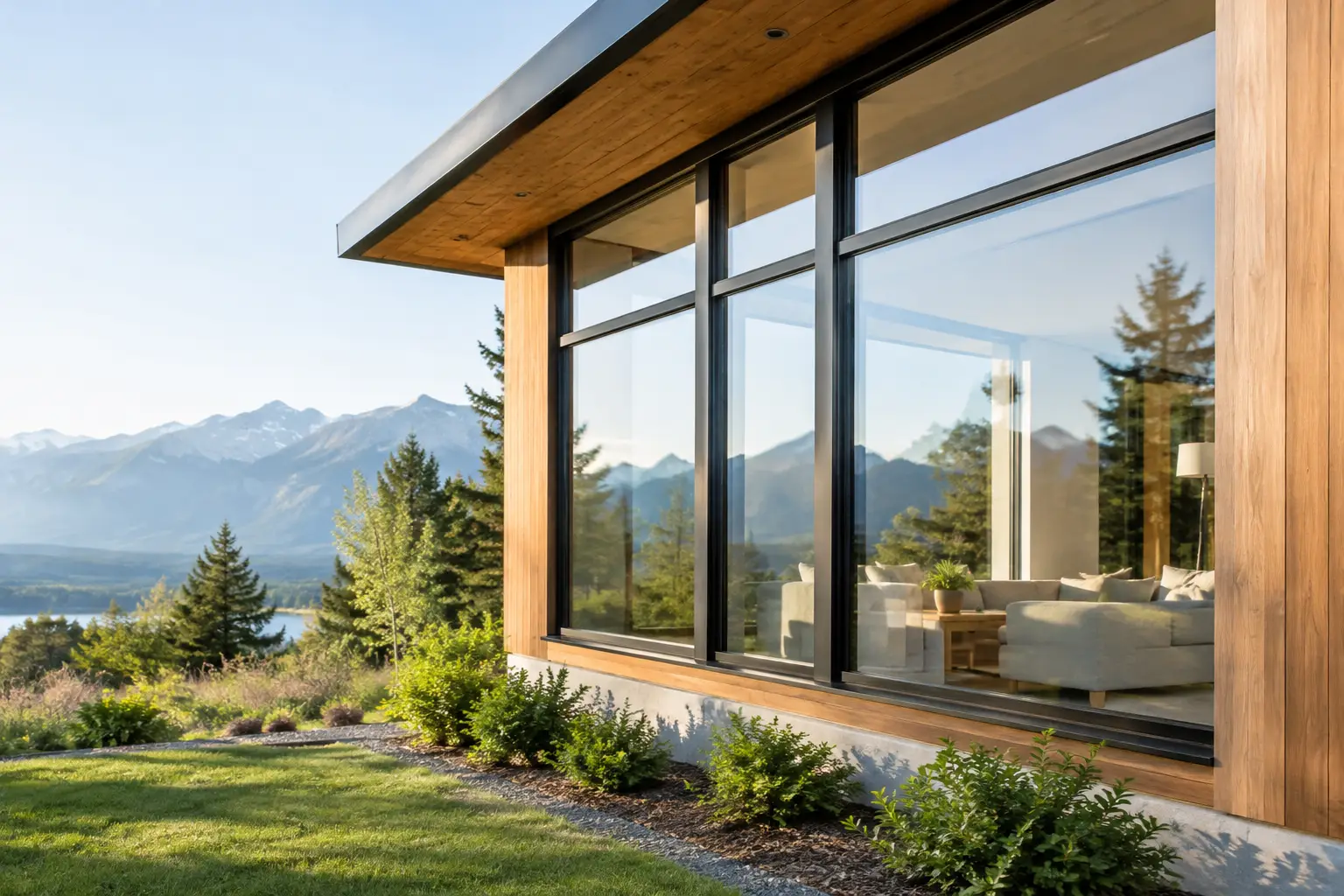
A cold perimeter around the living-room glass, condensation at the bottom corners, traffic noise that carries through closed windows – these are not minor annoyances in a well-designed home. They are signs that the window system is underperforming. High performance windows address these problems as complete engineered assemblies, combining advanced glazing, insulated frames, airtight seals, and professional installation.
For custom homes and serious renovations, the difference is felt every day. Rooms remain more even in temperature, glass surfaces are less uncomfortable to sit beside, exterior sound is reduced, and larger architectural openings become possible without accepting a builder-grade level of comfort.
What Makes High Performance Windows Different?
A window should not be judged by glass alone. Its real performance comes from the relationship between the insulated glass unit, frame profile, spacer, weather seals, hardware, and connection to the wall. A premium triple-pane unit can still disappoint if it sits in a poorly insulated frame or is installed with gaps around the rough opening.
High performance windows typically use triple-pane insulated glass units with argon-filled cavities, Low-E coatings, and warm-edge spacer technology. This combination reduces heat transfer through the glass while helping the inside pane stay warmer during Southern Ontario winters. A warmer interior glass surface improves comfort near the window and helps limit the conditions that lead to interior condensation.
The frame matters just as much. Reinforced PVC-U profiles from established European systems such as VEKA and Kömmerling use multiple internal chambers to improve insulation and stability. Thermally broken aluminum systems from Aluprof, Reynaers, and Schüco pair a refined architectural appearance with insulation designed to interrupt the direct transfer of heat through metal. The right choice depends on the opening size, sightline requirements, façade design, and desired finish.
Glass Performance Is More Than Triple Pane
Triple-pane glazing is a strong starting point for a premium Canadian window, but it is not a universal answer to every design question. Glass specification should respond to orientation, solar exposure, privacy needs, exterior noise, and the size of the opening.
Low-E coatings can be selected to manage solar gain. On a highly exposed south- or west-facing elevation, glass that limits excessive solar heat can reduce overheating and glare. In other conditions, a specification that allows more beneficial solar gain may be appropriate. The objective is not simply to select the lowest possible U-value. It is to create a balanced envelope that suits the home.
Laminated glass is worth considering beside busy roads, rail corridors, or active neighbourhood streets. Its interlayer can improve acoustic control while also adding a layer of security. For bedrooms and offices, this can make a meaningful difference, particularly when paired with compression seals and properly adjusted hardware.
Large panes introduce another consideration: weight. Triple-pane glass, laminated glass, and oversized dimensions all place higher demands on profiles, hardware, and installation. Premium systems are designed to carry these loads, but the specification must be coordinated early. An expansive fixed window may be practical where an equally large operable sash would require a different configuration or a more substantial system.
Insulated Frames, Stronger Seals, Better Comfort
The coldest part of many conventional windows is not the centre of the glass. It is often the edge of the glass, the frame, or the junction between the unit and wall. High performance systems focus on these weak points.
Warm-edge spacers reduce heat loss around the perimeter of an insulated glass unit compared with more conductive spacer materials. Multi-chamber PVC-U frames slow heat movement through the profile. Thermally broken aluminum frames use an insulating barrier between the interior and exterior aluminum sections. Together, these details help reduce edge condensation and create a more consistent interior surface temperature.
Air leakage is equally significant. European-format tilt-and-turn windows use continuous perimeter gaskets and multi-point locking hardware to create a firm compression seal when closed. Compared with a basic slider or loosely fitted casement, the result can be a noticeably quieter and less draft-prone room. Tilt-and-turn operation also provides controlled ventilation: tilt the sash inward at the top for gentle airflow, or open it fully inward for cleaning and egress where the design permits.
Airtightness should still be considered alongside ventilation. A tighter home requires a well-planned mechanical ventilation strategy, particularly in renovations where several envelope upgrades occur at once. Better windows reduce uncontrolled air leakage; they are not a substitute for fresh-air design.
Choosing PVC-U or Architectural Aluminum
PVC-U and aluminum are both capable of excellent thermal performance, but they answer different architectural needs. PVC-U is a highly effective choice for many residential renovations and new homes because it offers strong insulation, dependable weather resistance, and a clean finish at a favourable performance-to-cost ratio. It works particularly well for conventional-sized windows, tilt-and-turn configurations, and contemporary homes where frame depth is acceptable.
Architectural aluminum is often selected when the design calls for narrower visual lines, dark exterior finishes, substantial openings, or coordinated window-and-door elevations. Premium thermally broken aluminum systems support larger glazed areas and can create a more minimal façade expression. They are especially relevant for panoramic sliding doors, corner glazing, tall fixed units, and modern custom homes where the frame must perform structurally as well as visually.
The trade-off is straightforward: aluminum systems often involve a higher investment, and their thermal performance depends heavily on the quality of the thermal break and glazing package. PVC-U can offer excellent insulation, though it may not be the preferred material for every oversized or ultra-slim architectural detail. Material selection should follow the project, not a generic rule.
Installation Determines Whether the Specification Delivers
Even the best window can lose its advantage at the wall connection. A high performance installation begins with accurate opening measurements, appropriate shimming and fastening, insulation around the perimeter, air sealing, and exterior water management. The unit must be square, plumb, level, and properly supported so the sash operates correctly and seals evenly.
For replacement projects, installation planning also means evaluating the existing wall condition. Hidden rot, poorly flashed openings, damaged sheathing, or inadequate sill details should be addressed rather than covered by new trim. In a custom build, window integration should be coordinated with the air barrier, exterior insulation, cladding, and drainage plane before installation begins.
Oversized glazing requires additional discipline. Heavy panels need correct bearing points and structural support. Large sliding systems need a prepared sill and threshold condition that manages water without compromising accessibility or finished floor transitions. These are not details to resolve after the products arrive on site.
At ECOWIN, product selection and installation are approached as one performance decision. That matters when a project includes tall window walls, European tilt-and-turn units, insulated entrance doors, or panoramic sliders that must meet both aesthetic and envelope expectations.
Where the Investment Delivers the Most Value
High performance windows bring their clearest benefits where the existing units are cold, noisy, leaky, or visually restrictive. A bedroom facing a major road, a family room with broad west-facing glass, and a renovation that replaces several small openings with one expansive glazed elevation are all strong candidates.
They also make sense when the home is being upgraded as a complete system. Added exterior insulation, improved air sealing, a new HVAC strategy, and premium windows can work together to improve comfort substantially. Replacing windows alone can still solve drafts and operational problems, but expectations should be realistic if walls, attic insulation, or ventilation remain weak.
Do not select solely by a headline R-value or a showroom sample. Review the full configuration: glass coatings, spacer, frame material, reinforcement, opening type, hardware, acoustic requirements, and installation scope. Ask how the proposed system performs at the frame and glass edge, not only at the centre of glass.
The best window is the one that makes an architectural opening feel effortless to live with. When the specification is right, you notice the view, the daylight, and the finish of the room – not the cold glass, outside traffic, or the need to reach for a blanket beside the window.