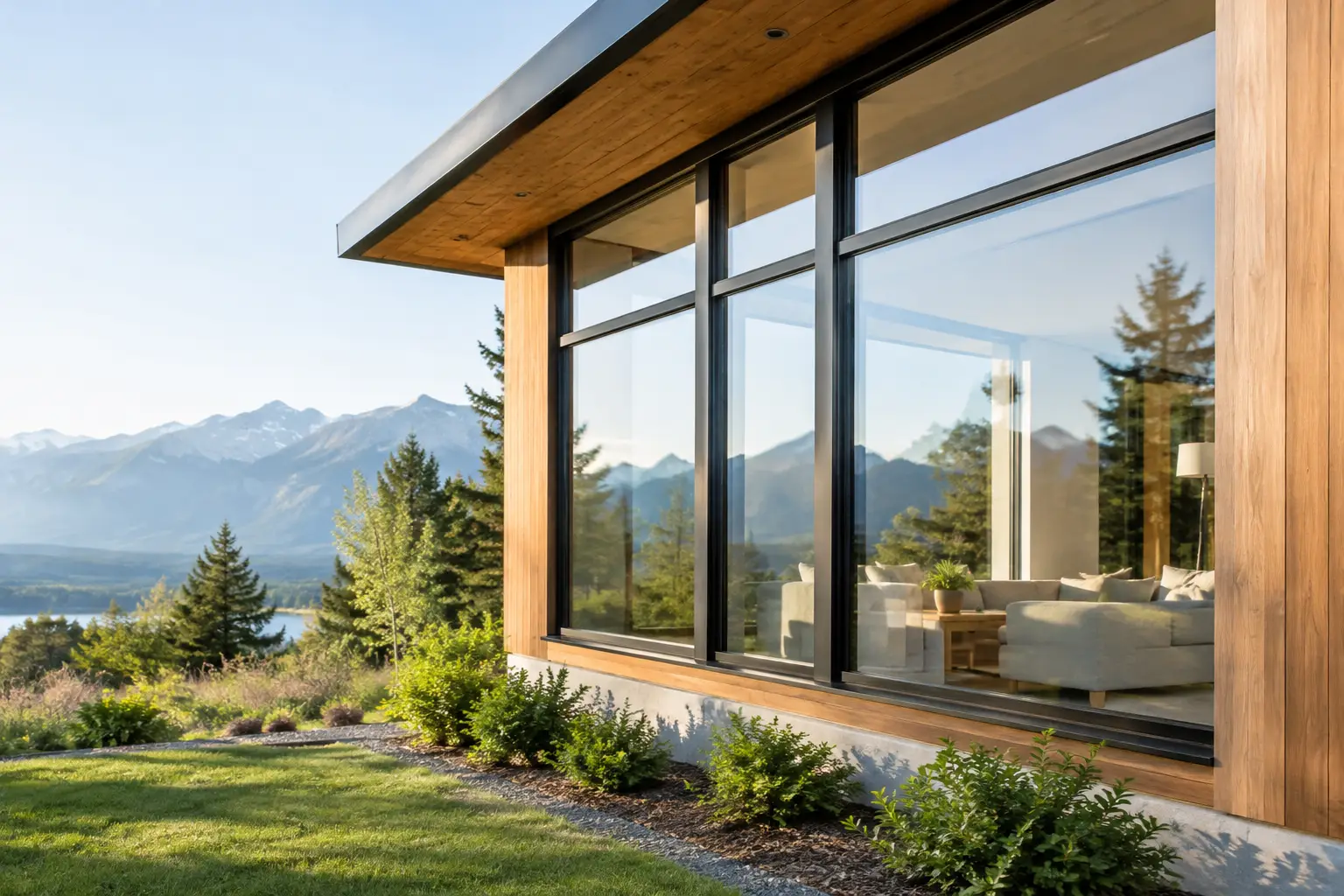
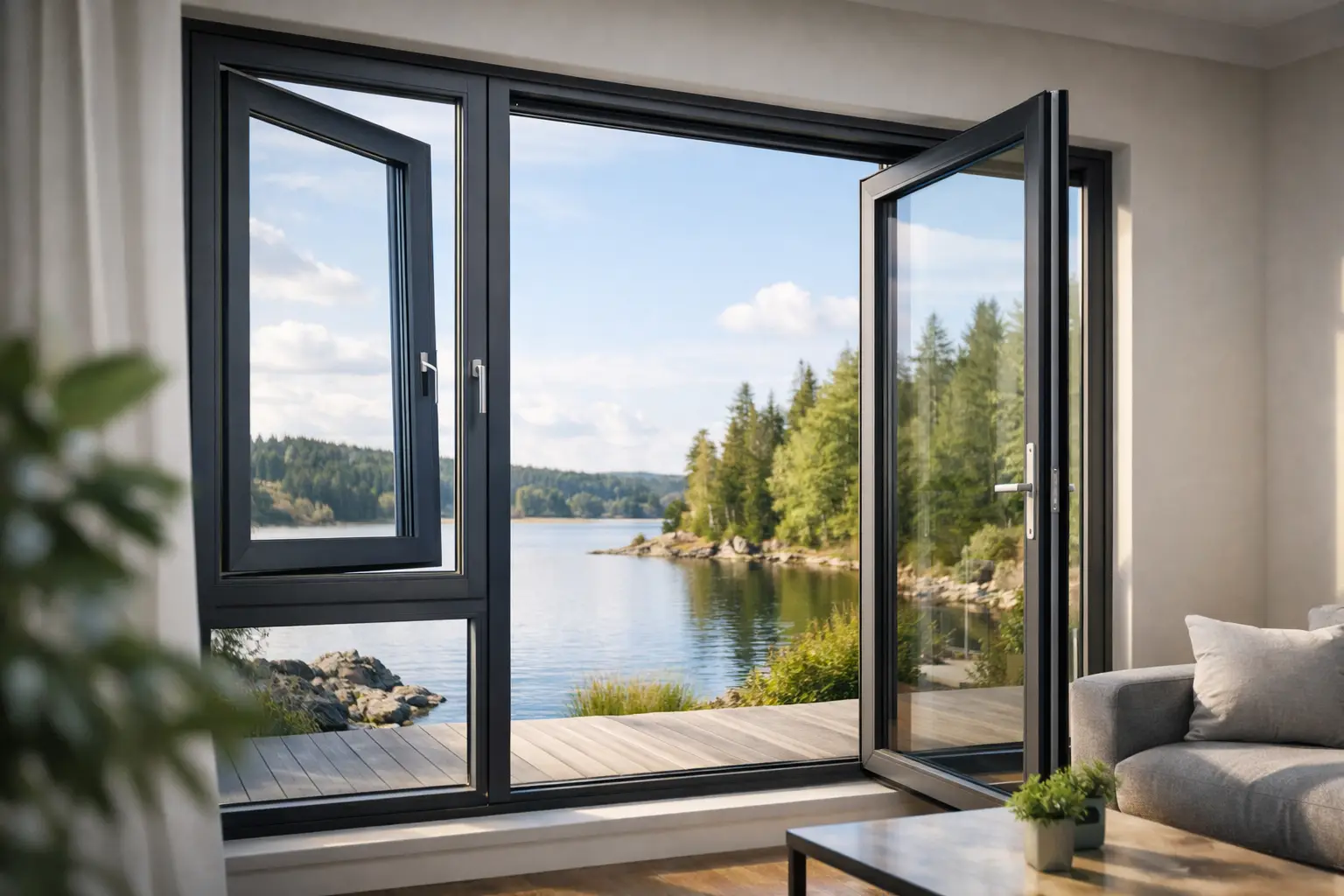
A floor-to-ceiling opening facing the escarpment, a sharply proportioned black frame, or a heritage-inspired grid can change the character of an entire home. The choice between aluminum versus steel windows determines more than the façade aesthetic. It affects glass size, interior comfort, condensation resistance, hardware options, structural detailing, and the long-term budget for a custom build or major renovation.
Both materials belong in premium residential architecture. Neither is automatically better. Aluminum is usually the more versatile answer for large, thermally efficient contemporary openings. Steel offers exceptionally slender profiles and a distinctive sense of precision that is difficult to duplicate. The right specification depends on the opening, the glass package, the exposure, and the architectural intent.
Aluminum versus steel windows at a glance
Aluminum windows use extruded aluminum profiles, typically with a polyamide thermal break separating the interior and exterior metal sections. This construction allows manufacturers to create strong frames with deep glazing pockets, concealed drainage, multi-point locking, and profiles suitable for large insulating glass units.
Steel windows use formed or rolled steel sections. Their inherent strength permits remarkably narrow frame and mullion dimensions, making them particularly compelling where the frame should recede and the glass geometry should lead. Modern premium steel systems can include thermal breaks and high-performance glazing, but their performance depends heavily on the exact system selected.
For a modern home with expansive glazing, aluminum is generally the practical starting point. For a refined steel-look façade, a narrow-grid interior partition, or a historically informed design where authentic slenderness matters, steel may justify its higher cost and more specialized detailing.
Sightlines and architectural expression
Steel has a natural advantage where minimal visible frame width is the central design requirement. Because steel is exceptionally strong, it can support glass with very slim profiles. This produces the fine, almost drawn-line appearance associated with classic industrial glazing, European steel casements, and elegant divided-lite doors.
Aluminum profiles are also slim by residential standards, particularly in premium architectural systems from manufacturers such as Schüco, Aluprof, and Reynaers. Their sections are usually wider than steel when compared directly, but they can remain exceptionally clean and restrained. Aluminum is often the better choice for large fixed windows, lift-and-slide doors, corner glazing, and tall assemblies where profile strength, drainage, and integrated hardware matter as much as frame width.
The distinction is most visible at smaller openings and in grid-heavy compositions. A steel window can make a series of narrow panes feel lighter and more deliberate. At panoramic scale, however, the visual difference can narrow while aluminum’s engineering flexibility becomes more valuable.
Large-format glazing usually favours aluminum
A premium aluminum system can accommodate substantial triple-pane insulated glass units, including laminated panes for security or acoustic control. It also supports the heavy-duty rollers, locking points, and reinforced frame geometry required by large operable panels.
That matters when an opening is several metres wide or when a sliding door must operate precisely year after year. Steel can be engineered for ambitious dimensions, but the cost, weight, fabrication requirements, and site coordination often increase quickly. For oversized residential glazing, aluminum is usually the more efficient material platform.
Thermal performance in a Canadian climate
Metal conducts heat. This is the central technical consideration for both aluminum and steel windows in Southern Ontario and other cold-weather regions. A frame without an effective thermal break can create cold interior surfaces, perimeter condensation, and a noticeably less comfortable room even when the glass itself is high-performing.
The material alone does not determine energy performance. The complete window system does. Look for a properly engineered thermal break, insulated frame cavities where applicable, a high-performance triple-pane IGU, argon fill, Low-E coatings, warm-edge spacer technology, and professional installation that maintains continuity with the wall’s air and water barriers.
Aluminum has a mature ecosystem of thermally broken residential systems. A well-specified aluminum window can provide excellent thermal performance while retaining the rigidity needed for large glass. Its wider frame sections can also create room for deeper glazing configurations and more substantial insulation zones.
Steel conducts heat more readily than aluminum, so a thermally broken steel system is essential for exterior residential use in this climate. Premium thermally broken steel products are available and can perform well, but they should not be confused with traditional uninsulated steel frames. The latter may suit conditioned interior partitions or mild climates, but they are rarely appropriate for an exterior Canadian envelope.
Do not compare frame material without comparing the whole assembly
A low centre-of-glass U-value does not guarantee a warm window. Frames, edge spacers, mullions, seals, installation interfaces, and air leakage all influence the result. Ask for whole-window thermal values for the specific size and configuration under consideration, not only glass specifications or generic brochure claims.
Operable units also deserve close attention. A fixed pane can achieve stronger thermal and air-tightness results than a large opening sash. If the design includes many operable panels, superior gaskets, compression seals, hardware adjustment, and installation quality become even more significant.
Strength, durability, and maintenance
Both materials are durable when finished and detailed correctly. Aluminum naturally forms a protective oxide layer and is commonly powder-coated or anodized for colour retention and weather resistance. It does not rust, making it a dependable option for exposed façades and demanding contemporary applications.
Steel requires more protection because it can corrode if the coating system is compromised. High-quality steel windows use galvanizing, zinc-rich primers, durable topcoats, and carefully managed joints to resist moisture. This is not a reason to reject steel. It is a reason to specify a proven system and ensure that fabrication, finishing, transport, and installation are handled to a premium standard.
In practice, aluminum generally asks less of the homeowner over time. Steel can provide decades of service, but it benefits from periodic inspection of coatings, particularly at welds, corners, sills, and high-exposure elevations. Coastal or high-moisture conditions demand especially careful material and finish selection.
Cost: where the premium goes
Aluminum windows are premium products, particularly when equipped with triple-pane glass, high-performance hardware, custom colours, and large-format configurations. Yet aluminum’s widespread use in architectural glazing gives it a relative cost advantage in many exterior residential applications.
Steel is typically more expensive. The material itself is only part of the story. Precision fabrication, welding, finishing, specialized glazing methods, heavier handling requirements, and narrower production volumes all add to the investment. Complex grids and custom shapes can increase costs further.
That premium can be entirely rational when steel is fundamental to the design. If replacing it with aluminum would dilute the façade’s proportions or the interior’s character, steel may be the correct architectural decision. If the objective is expansive glass, strong energy performance, and a contemporary minimal frame, aluminum often provides more performance per dollar.
Where each material makes the most sense
Choose thermally broken aluminum when the project includes oversized fixed windows, panoramic sliding doors, broad corner views, or a modern façade with large expanses of triple-pane glass. It is also a strong choice when low maintenance, consistent finishes, and high-performing operable systems are priorities.
Choose thermally broken steel when the home calls for the finest possible sightlines, narrow divided lites, heritage-sensitive proportions, or a deliberate steel-frame aesthetic. Steel can be especially effective for statement entry doors, carefully composed casements, and interior glazed partitions where thermal demands are lower.
Some of the strongest projects use both. Aluminum can manage the large exterior glazed elevations and lift-and-slide openings, while steel defines a feature entrance, wine room, office partition, or finely detailed rear addition. Material consistency matters, but using the same frame material everywhere is not always the most intelligent design decision.
The specification details that protect the investment
Before approving either option, review the actual shop drawings and performance data for the intended opening sizes. Confirm the frame depth, thermal-break design, glazing build-up, drainage strategy, glass thickness, hardware, finish warranty, and whole-unit thermal performance. For large assemblies, ask how deflection, wind load, panel weight, and installation tolerances will be managed.
The installation plan deserves equal scrutiny. Premium windows can underperform when perimeter gaps are poorly insulated, flashing is incomplete, or air sealing is treated as an afterthought. Proper integration with the wall assembly is what turns a high-performance frame and triple-pane IGU into a quieter, warmer, more reliable opening.
For homeowners weighing aluminum versus steel windows, start with the façade rather than a material preference. Decide what the opening must achieve: a nearly invisible frame, a wall of glass, superior winter comfort, a heritage grid, or an operable door of exceptional scale. The best window is the one whose structure, thermal design, and proportions remain convincing long after the architectural rendering becomes a lived-in home.