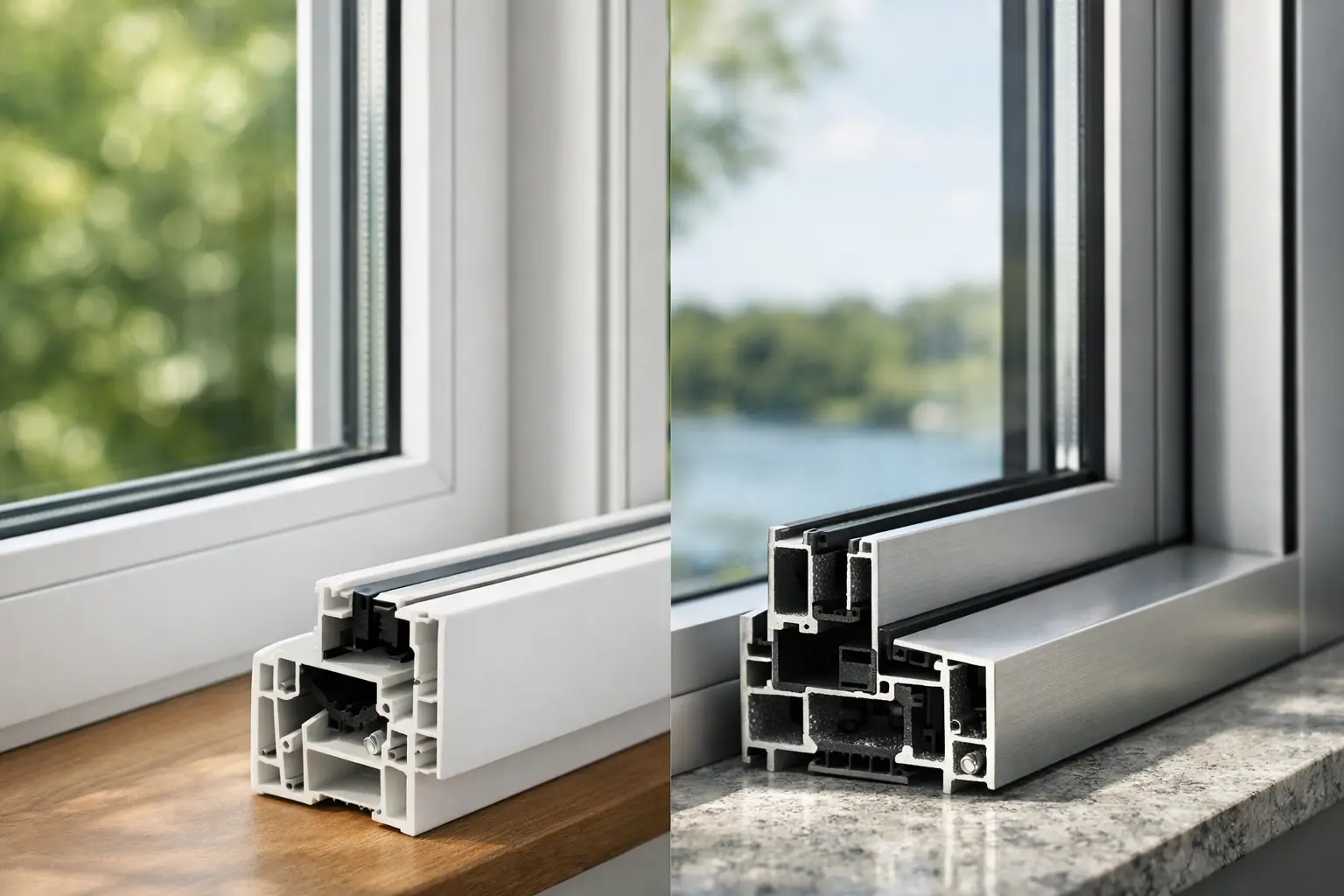
A large aluminium window can look exceptional on a contemporary home, but appearance alone does not determine whether it will perform through a Southern Ontario winter. Without proper insulation within the profile, aluminium readily transfers outdoor cold to the interior face of the frame. Thermal break frames address that weakness, making slim, architectural aluminium systems practical for high-performance residential glazing.
For homeowners replacing builder-grade windows, planning a custom build, or specifying oversized sliding doors, the frame deserves as much attention as the glass package. Triple-pane glass, Low-E coatings, argon fill, and warm-edge spacers all matter. Yet a premium insulated glass unit can still be limited by a frame that creates cold edges, condensation risk, and unnecessary heat loss.
What thermal break frames actually do
A thermal break is a low-conductivity insulating section placed between the exterior and interior portions of an aluminium frame. It is typically made from engineered polyamide strips, mechanically joined into the profile during manufacturing. Rather than allowing heat and cold to travel directly through a continuous metal section, the break interrupts that path.
The result is a frame with a warmer interior surface in winter and a cooler interior surface in summer. That is the practical difference a homeowner notices when sitting beside a large window wall, using a patio door during a cold spell, or seeing less moisture collect around the perimeter of glazing.
Aluminium remains a strong, dimensionally stable material. It is particularly well suited to narrow sightlines, large panes, tall openings, and refined contemporary façades. The thermal break does not turn aluminium into PVC-U, nor should it. It allows aluminium to retain its structural and aesthetic advantages while substantially improving its thermal behaviour.
Why untreated aluminium is a problem
Metal conducts heat much faster than insulated materials. In an uninsulated aluminium frame, winter cold can migrate inward quickly, lowering the temperature of the interior frame surface. When warm indoor air contacts that cold surface, moisture can condense. Persistent condensation may stain finishes, damage adjacent materials, and encourage mould growth where ventilation is poor.
A thermal break raises the interior surface temperature, reducing this risk. It does not eliminate condensation under every condition. Indoor humidity, outdoor temperature, air circulation, glazing specification, and installation quality all affect the outcome. But it gives the frame a far better starting point than conventional non-thermally broken aluminium.
Thermal break frames and overall window performance
A window or door is a system, not a piece of glass placed in a hole. Its performance depends on the relationship between the frame, sash, glazing, seals, hardware, and connection to the wall assembly. Thermal break frames are a critical part of that system, especially in homes with substantial glazing.
Performance is often discussed through U-factor or U-value, which measures heat transfer. Lower values indicate better insulating performance. The glass may carry an impressive centre-of-glass rating, but the whole-unit value will be less favourable once the frame and edge conditions are considered. This is why comparing products based only on glass specifications can be misleading.
A well-designed thermally broken aluminium system combines the insulating break with multi-chamber geometry, high-quality gaskets, properly designed drainage, and a glazing pocket suitable for insulated glass units. Premium systems may accommodate triple-pane IGUs, substantial glass thicknesses, and advanced hardware without compromising alignment or weather sealing.
For a large fixed window, lift-and-slide door, or multi-panel patio system, this engineering matters. Bigger panes create more visual openness, but they also place higher demands on frame stiffness, sash weight capacity, seal compression, and installation tolerances. A properly specified aluminium system can support the architectural ambition without making comfort an afterthought.
Where thermally broken aluminium makes the most sense
Thermally broken aluminium is not automatically the right answer for every opening. High-performance PVC-U systems can deliver excellent insulation, strong airtightness, and outstanding value for many standard residential window configurations. They are often an intelligent choice for bedroom windows, renovation openings, and projects where deeper frame profiles are acceptable.
Aluminium becomes particularly compelling where architecture calls for greater spans, slimmer visual lines, dark finishes, or more demanding door configurations. These include expansive rear elevations, corner glazing, oversized tilt-and-turn windows, contemporary entrance systems, and panoramic lift-and-slide doors opening to terraces or pools.
The choice often comes down to balancing insulation, sightline, scale, and budget. A premium home may use high-performance PVC-U windows in secondary elevations and thermally broken aluminium for statement openings where structural capability and frame proportions have the greatest visual impact. There is no single material that wins every application.
Dark exterior finishes need thoughtful specification
Black, charcoal, bronze, and other dark frame finishes have become a defining feature of modern residential design. Aluminium handles these finishes exceptionally well, including durable powder-coated surfaces with a crisp architectural appearance. However, dark frames absorb more solar heat, causing greater expansion and contraction across seasonal temperature swings.
A quality system is designed to manage that movement through suitable profile design, reinforcement, gaskets, and fabrication practices. Large dark-coloured units should never be selected solely by appearance. Their dimensions, exposure, glass load, hardware, and installation detailing all need to be considered together.
The frame cannot compensate for poor installation
Even the best thermal break is compromised when the window or door is installed without proper air, water, and insulation detailing. A gap around the frame, an interrupted air seal, or poor shimming can create drafts and cold spots that homeowners may incorrectly blame on the product itself.
Installation should account for the unit’s weight, expansion characteristics, drainage requirements, and connection to the building envelope. This is especially important with large-format aluminium glazing. A panoramic door or floor-to-ceiling fixed unit can weigh hundreds of kilograms. It requires accurate structural support, disciplined levelling, and anchoring that maintains both long-term operation and weather performance.
The perimeter also needs an intentional insulation strategy. Low-expansion foam may have a role, but it is not a complete weatherproofing plan. Interior air sealing, exterior water management, and correct flashing integration protect the opening from moisture while preserving the thermal value of the assembly.
For renovation projects, the existing wall condition matters just as much. Removing an older window can reveal damaged framing, weak sill conditions, missing insulation, or concealed moisture issues. Addressing these details before a new unit is installed protects the investment in the finished system.
Questions to ask when comparing aluminium window and door systems
When reviewing thermal performance, ask for whole-unit values rather than a glass-only claim. Confirm whether the proposed frame is truly thermally broken and whether the quoted configuration uses double-pane or triple-pane glazing. These are not minor specification details; they directly affect interior comfort and condensation resistance.
It is also worth asking about the frame depth, thermal break design, gasket system, hardware capacity, and tested air and water performance. For doors, understand the threshold design and how it balances accessibility, drainage, and weather resistance. A low threshold can be visually clean and easy to cross, but it must be appropriate for the exposure and drainage conditions of the opening.
For a Canadian climate, glazing selection should be coordinated with orientation. A south-facing elevation may benefit from different solar-gain priorities than a shaded north elevation. Bedrooms facing a busy road may also need an acoustic glass specification, because thermal performance and sound control are related but not identical.
ECOWIN specifies European-format systems with the full assembly in view: insulated frame technology, glazing configuration, hardware, and installation requirements. That approach is particularly valuable when a project involves large openings that must look minimal while delivering reliable year-round performance.
A better way to judge comfort at the glass line
The most useful test is not whether an aluminium frame feels as warm as a wall. No frame will. The better question is whether the complete window or door assembly maintains comfortable interior surface temperatures, resists excessive condensation, seals tightly, and performs reliably through changing weather.
Thermal break frames make that possible in applications where conventional aluminium would be difficult to justify. They let homeowners specify slender sightlines and expansive glazing with far fewer compromises on warmth and efficiency. When matched with triple-pane glass, warm-edge spacer technology, capable seals, and precise installation, they help large openings feel like a deliberate part of the home rather than its coldest edge.