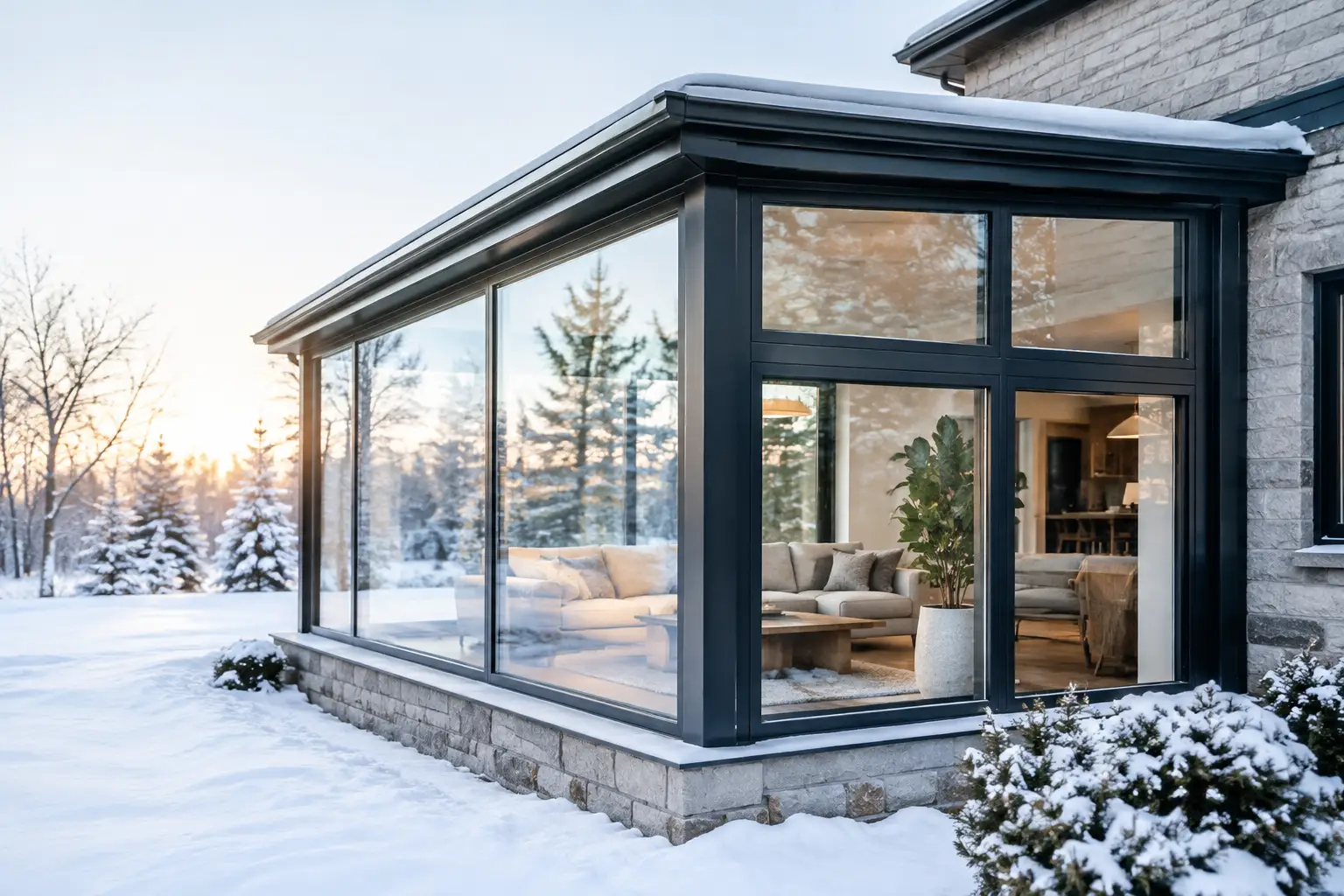
A floor-to-ceiling window can transform a room, but an uninsulated metal frame can undermine the experience quickly. On a cold Southern Ontario morning, the inside edge of the frame may feel chilled, condensation can collect near the glass, and the radiant discomfort can make a beautiful window seat less inviting. Thermally broken aluminum frames address this weakness while retaining the slim sightlines, structural capacity, and architectural precision that make aluminum desirable.
For custom homes, major renovations, and view-oriented additions, this construction detail is not an optional upgrade hidden in a specification sheet. It is central to whether oversized glazing performs as well as it looks.
What Makes an Aluminum Frame Thermally Broken?
Aluminum is exceptionally strong, durable, and dimensionally stable. It can support wide panes of glass, tall operable doors, and refined profiles that would be difficult to achieve with many other materials. Its drawback is conductivity. Solid aluminum readily transfers heat and cold from one side of the frame to the other.
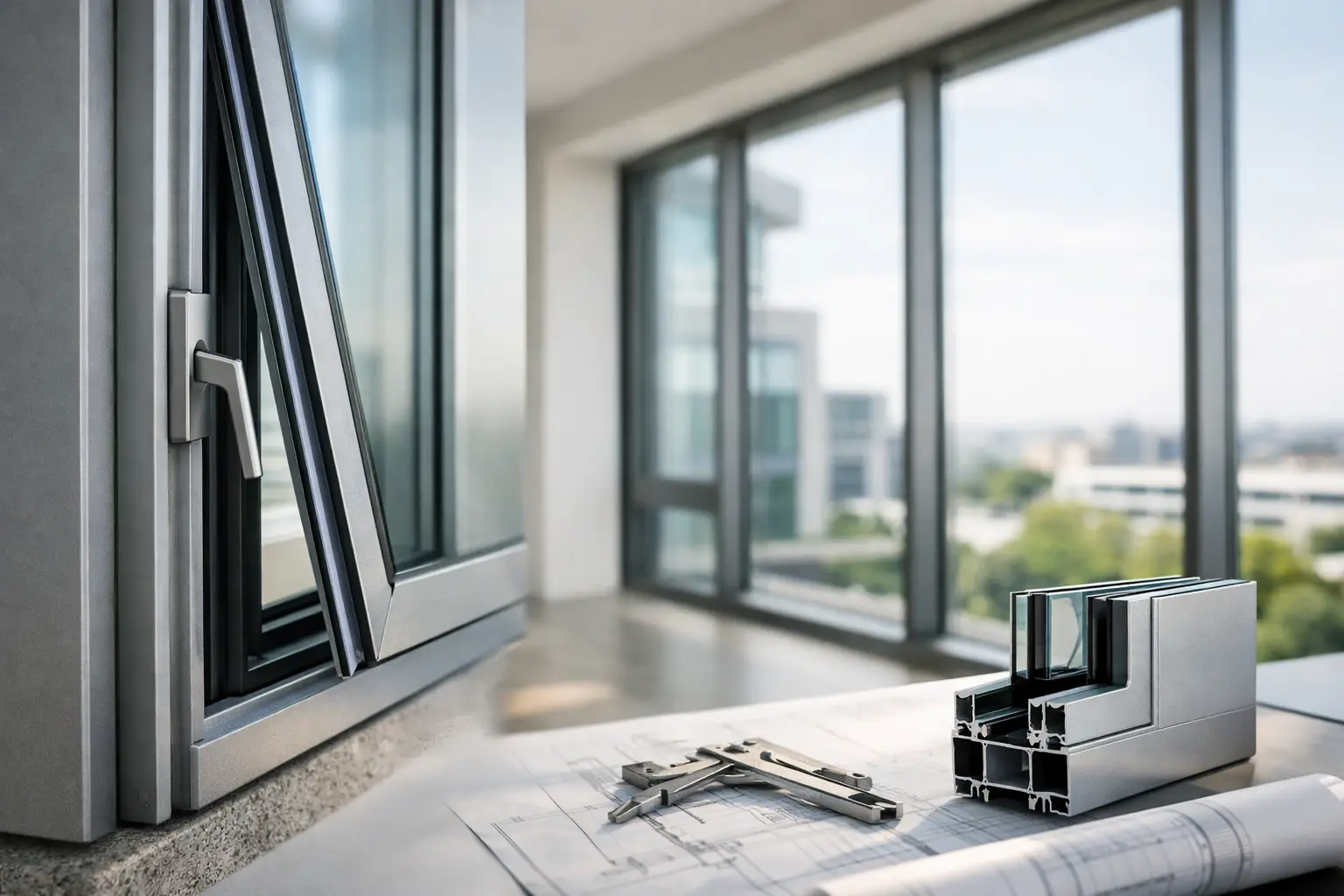
A thermal break interrupts that path. Rather than using a continuous aluminum section from exterior to interior, the frame is formed from separate inner and outer aluminum profiles joined by an insulating polyamide strip. This high-performance material is engineered to resist heat transfer while maintaining the mechanical connection needed for a strong, stable frame.
The result is a frame with an exterior designed to withstand weather and an interior that stays significantly closer to room temperature. In premium European-format systems, thermal breaks work alongside multi-chamber profile geometry, insulated glazing pockets, continuous compression seals, and carefully designed drainage paths. The performance comes from the full assembly, not simply from inserting a strip of insulation into metal.
Why Thermally Broken Aluminum Frames Matter in Canadian Homes
A window or door opening is only as effective as its weakest component. Homeowners often focus on glass specifications – and triple-pane insulated glass units with argon fill, Low-E coatings, and warm-edge spacers are highly consequential – but a highly efficient glass package cannot fully compensate for a poorly insulated frame.
A warmer perimeter around the glass
The most immediate benefit is comfort. When interior frame surfaces remain warmer in winter, there is less cold radiation around the opening and less likelihood of the chilly perimeter effect common with older aluminum windows. This matters most in rooms with expansive glazing, where people sit, work, or gather close to the view.
Thermally broken frames also support more even interior surface temperatures. That can reduce the impulse to close blinds or avoid parts of a room during the coldest months. The visual openness of panoramic glass is more valuable when the space beside it remains comfortable.
Better resistance to interior condensation
Condensation is not always caused by a window problem. Indoor humidity, occupancy, cooking, ventilation, and outdoor temperature all affect it. Still, cold interior frame surfaces increase the risk. When humid indoor air meets a surface below its dew point, moisture forms.
By raising the temperature of the interior aluminum, a properly designed thermal break helps reduce that risk. It does not eliminate the need for sensible humidity management, particularly during sharp winter weather, but it gives the window system a much stronger starting point than conventional non-thermal aluminum.
Lower heating and cooling demand
Heat moves through frames as well as glass. A thermally broken aluminum system limits conductive heat loss in winter and slows unwanted heat gain in summer. The practical impact depends on the size and orientation of the opening, the glass specification, the home’s insulation, airtightness, and mechanical system.
For a modest replacement window, the energy difference may be less dramatic than it is for a wall of sliding doors or a multi-panel lift-and-slide system. As glass areas become larger, frame design and glazing selection deserve more scrutiny. This is where premium aluminum systems justify their place in a project budget.
Thermal Breaks Are Only One Part of Window Performance
It is tempting to compare products by asking whether they have a thermal break. That is a worthwhile first question, but it is not enough to specify a high-performance assembly.
The thermal break’s width, composition, and integration with the aluminum profile all matter. So do the thermal properties of the glass edge, the depth of the glazing pocket, the number and placement of weather seals, and the quality of the sash-to-frame connection. An insulated frame paired with basic double-pane glass will not deliver the same result as an insulated frame fitted with a properly specified triple-pane IGU.
Air and water performance deserve equal attention. A thermally broken frame can still disappoint if operable components do not seal reliably or if the installation leaves gaps between the frame and the building envelope. Premium systems use multiple gaskets and sophisticated hardware to create consistent compression around the opening. Proper installation then connects that system to the wall with appropriate air sealing, insulation, flashing, and exterior water management.
For architects and homeowners, published thermal metrics should be reviewed at the whole-window or whole-door level where possible. Centre-of-glass numbers are useful, but they do not represent the performance of the complete installed unit. A large sliding door, fixed picture window, and tilt-and-turn window can each produce different results even when they share a related profile family.
Where Aluminum Is the Right Choice
Thermally broken aluminum is especially compelling where structure, scale, and crisp design language are priorities. It allows for slender visual divisions and larger glass dimensions while maintaining resistance to wind load, operational stress, and long-term movement. That is why it is often selected for panoramic sliders, oversized fixed glazing, contemporary entrance doors, and projects with dark exterior finishes.
It is not automatically the right choice for every opening. Premium PVC-U systems can offer excellent thermal performance and strong value for conventional window sizes, particularly in renovations where deep frame profiles are acceptable. Aluminum generally commands a higher investment because of the material, engineering, fabrication, and hardware required.
The decision should follow the architecture. If a project calls for narrow mullions, broad uninterrupted views, very large moving panels, or a precise aluminum façade appearance, a thermally broken aluminum system is often the more appropriate solution. If the priority is maximizing insulation value within a more conventional opening and budget, a high-quality PVC-U system may be a better fit.
Specifying a High-Performance Aluminum System
Start with the opening itself: its dimensions, exposure, orientation, desired sightlines, and whether it must open. A south- or west-facing glazed wall may need solar-control glass choices that differ from a shaded north elevation. A waterfront or elevated site may require stronger wind-load considerations. An entrance door needs a different balance of insulation, security, and daily durability than a fixed window.
Then assess the complete system. Ask how the aluminum profiles are thermally separated, what glazing thicknesses they accept, whether triple-pane glass is practical for the panel size, and how drainage and gasket systems are engineered. For operable units, examine the hardware capacity and locking arrangement rather than judging the product from a showroom sample alone.
Installation planning should happen before the order is finalized. Large aluminum assemblies are less forgiving of poor preparation than standard builder-grade units. Structural openings must be accurate, substrates must be sound, and the interface with cladding, insulation, and interior finishes must be coordinated. For ambitious glazing projects, site measurement, handling logistics, and sequencing are performance issues as much as construction details.
The Detail Behind the Better View
A refined aluminum window should not ask homeowners to choose between architecture and comfort. With a properly engineered thermal break, high-performance glass, effective seals, and disciplined installation, aluminum can deliver expansive views without turning the perimeter of the room into a cold zone.
For projects built around larger openings and cleaner lines, the right question is not simply whether aluminum is insulated. It is whether the entire window or door system has been designed, specified, and installed to perform at the same level as the home around it. That is where the strongest results are found: in a quieter room, a warmer edge of glass, and a view that remains open year-round.