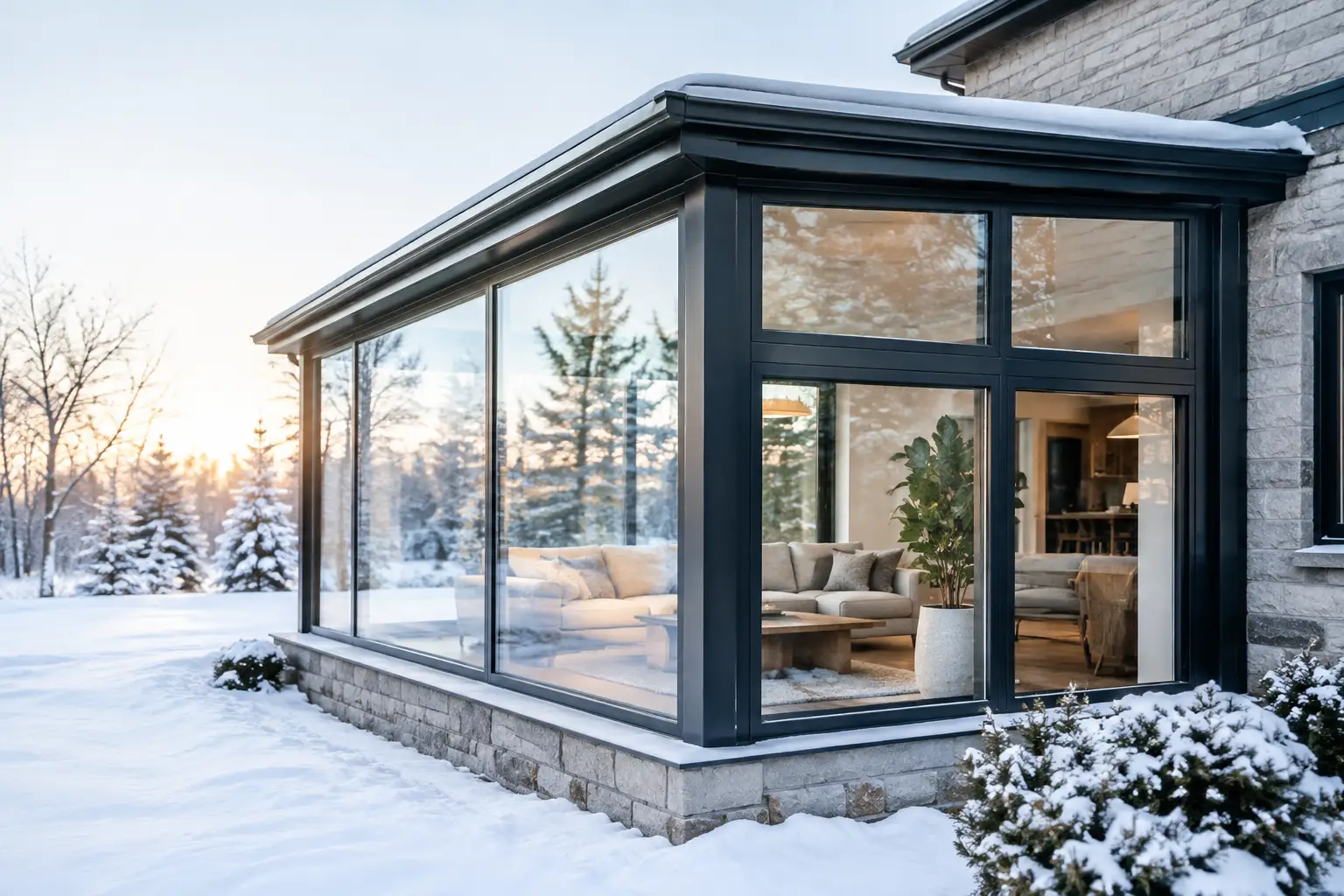
A window can look impressive in a showroom and still leave a room cold beside the glass in January. That is why the decision around triple glazing vs double glazing should go beyond pane count. For Southern Ontario homes, real performance comes from the complete window assembly: insulated glass, frame construction, seals, hardware, sizing, orientation and installation quality.
For a modest replacement opening, a well-specified double-pane unit may be appropriate. For expansive glazing, exposed elevations, quiet bedrooms and premium custom homes, triple-pane systems usually provide a meaningful step up in comfort and control. The right choice depends on the architecture, the existing wall assembly and what you expect from the space every day.
Triple Glazing vs Double Glazing: The Core Difference
Double glazing uses two panes of glass separated by a sealed airspace, while triple glazing adds a third pane and a second insulated chamber. Those chambers are commonly filled with argon gas, and the glass can receive low-emissivity, or Low-E, coatings that reflect heat back toward the interior during colder months.
The extra pane is not simply a marketing feature. It reduces heat transfer through the insulated glass unit, improving the glass centre-of-pane performance. In practical terms, the interior glass surface stays warmer when outdoor temperatures fall. That makes a difference where homeowners feel it most: beside a reading chair, at a kitchen sink, along a large bedroom window or near a panoramic sliding door.
A triple-pane package can also help moderate summer heat gain when its coatings are selected properly. However, glazing selection must be tailored to the façade. A south-facing wall with broad glass may benefit from a different solar heat-gain strategy than a shaded north-facing elevation. More glass is not automatically better glass unless the specification follows the building design.
Why Whole-Window Performance Matters More Than Pane Count
A triple-pane insulated glass unit installed in a weak frame will not deliver its full potential. The same is true when a high-performance unit is fitted with poor seals, undersized reinforcement or an inconsistent installation.
When comparing products, look beyond claims about the glass alone. The more useful measures include whole-window U-factor, air leakage performance, condensation resistance, spacer technology and the thermal quality of the frame. A warm-edge spacer around the perimeter of the insulated glass unit helps reduce heat loss at the edge, where condensation risk is often higher. Multi-chamber PVC-U frames, insulated aluminum profiles and well-engineered gaskets all support the performance of the glass.
European-format window systems are designed around this integrated approach. Quality PVC-U systems from manufacturers such as VEKA and Kömmerling use substantial multi-chamber profiles, while thermally broken aluminum systems can support larger, cleaner-lined openings without defaulting to builder-grade thermal performance. Hardware matters as well. Multi-point locking and compression seals help maintain even contact between sash and frame, improving weather resistance and daily operation.
For homeowners, this technical detail translates into fewer drafts, less cold radiation from the window surface and a more stable indoor environment. It is especially relevant in open-concept rooms where extensive glazing forms a major part of the exterior envelope.
Comfort, Condensation and Winter Performance
Ontario winters expose the limitations of basic window construction. A lower-performing double-pane window may allow the inside pane to become noticeably cold, even when the room thermostat is set correctly. The result is often a chilly perimeter zone, noticeable downdrafts and condensation on cold days when indoor humidity is high.
Triple glazing raises the interior surface temperature of the glass. It does not eliminate condensation in every condition – no glazing package can overcome excessive indoor humidity, poor ventilation or very cold exterior conditions indefinitely – but it provides a larger margin before moisture forms. This is valuable in homes with wide glass walls, spa-style bathrooms, kitchens and bedrooms where people want to use the space close to the window rather than retreat from it.
The difference is not always dramatic in a small, sheltered opening. It is more apparent with large units, north and west exposures, elevated sites, lakeside homes and rooms with a high ratio of glass to wall. If a project includes oversized fixed windows or lift-and-slide doors, triple-pane glazing is often the more coherent specification because it supports the premium envelope around those architectural features.
Acoustic Performance: Helpful, But Not Automatic
Both double and triple glazing can improve acoustic comfort over older windows. Triple glazing may offer an advantage because of its added mass and airspace, but pane count alone does not determine how quiet a window will be.
For traffic, rail, aircraft or dense urban noise, glass thickness and asymmetry are often more influential. An insulated glass unit with differently sized panes can disrupt a broader range of sound frequencies more effectively than three identical panes. Laminated glass may also be specified for targeted acoustic improvement, as well as enhanced safety and security.
Air leakage is equally important. Sound enters through openings far more easily than through glass. A carefully manufactured window with strong perimeter seals, correctly adjusted hardware and a properly sealed installation will typically outperform a poorly fitted product with a more elaborate glass package. For homes near busy roads in Hamilton, the GTA or Niagara, an acoustic assessment should consider the whole opening, not just the number of panes.
Cost, Weight and Design Trade-Offs
Triple-pane windows cost more than comparable double-pane units. They use more glass, more spacer material and often require stronger hardware or frame engineering due to increased weight. For a full-house renovation, that premium should be evaluated against the project scope rather than viewed as an isolated line item.
The return is partly financial through lower heating and cooling demand, but the immediate value is experiential: warmer rooms, reduced drafts, improved condensation resistance and better acoustic control. These are difficult to add later without replacing the windows again.
There are cases where double glazing remains sensible. A constrained budget may call for prioritizing triple-pane performance on bedrooms, large living areas, exposed elevations and oversized doors, while using high-quality double-pane units in smaller, protected openings. A well-built double-pane window with argon fill, appropriate Low-E coating, warm-edge spacers and an insulated frame can still significantly outperform an entry-level builder window.
Weight also deserves attention in design-led projects. Large operable panels need hardware and profiles engineered for the load. An oversized tilt-and-turn sash or sliding panel should not be specified on glass performance alone. It needs the right structural system to remain smooth, secure and weather-tight over years of use.
Choosing Glass for the Orientation and Opening
The best glazing package is tailored, not copied across every elevation. North-facing windows often prioritize heat retention and interior surface temperature. South-facing glass may balance insulation with useful winter solar gain, while west-facing openings require careful consideration of summer afternoon heat and glare.
Privacy, safety and view quality also affect the specification. A street-facing elevation may require laminated or obscure glass in selected areas. A view-oriented living room may call for larger fixed panes and narrow sightlines, paired with a thermally efficient aluminum or reinforced PVC-U system. Patio doors and panoramic sliding systems need particular attention because their scale increases the impact of any thermal or air-sealing weakness.
It is also worth distinguishing between a glass upgrade and a window upgrade. Replacing only the insulated glass unit may not address a drafty frame, poor drainage design, worn seals or inadequate anchoring. In many renovations, the strongest result comes from replacing the full system and integrating it properly with the wall, exterior cladding and interior finishes.
Installation Is Part of the Window Specification
Even exceptional European windows can underperform if the opening is not prepared correctly. Installation should account for structural support, shimming, fastening, perimeter insulation, air sealing, water management and exterior flashing details. Large-format systems add further requirements for handling, alignment and load transfer.
This is where premium supply and installation should work as one coordinated scope. The window must be measured for the actual opening conditions, not merely ordered to a nominal size. It must also be adjusted after installation so the sash or panel compresses evenly against its seals and locks correctly.
At ECOWIN, glazing decisions are considered alongside profile selection, opening size, hardware, façade design and installation conditions. That approach is particularly valuable for custom homes and renovations where standard replacement-window assumptions no longer apply.
Which Option Is Right for Your Home?
Choose triple glazing when year-round comfort is a central objective, when the project includes expansive or exposed glass, or when you are investing in a high-performance renovation or custom build. It is particularly well suited to bedrooms, living spaces, large fixed units and premium sliding door systems where cold glass and drafts would undermine the experience of the room.
Choose a high-quality double-pane package when project economics demand selectivity, the openings are smaller or well protected, and the system still offers strong frames, Low-E glass, argon fill, warm-edge spacers and excellent air sealing. The key is avoiding a false comparison between premium double glazing and basic builder-grade windows. They are not equivalent products.
The most useful next step is to assess each elevation and opening according to its exposure, size, use and architectural role. A well-specified window package should make the house feel quieter and warmer without asking the architecture to compromise its views.